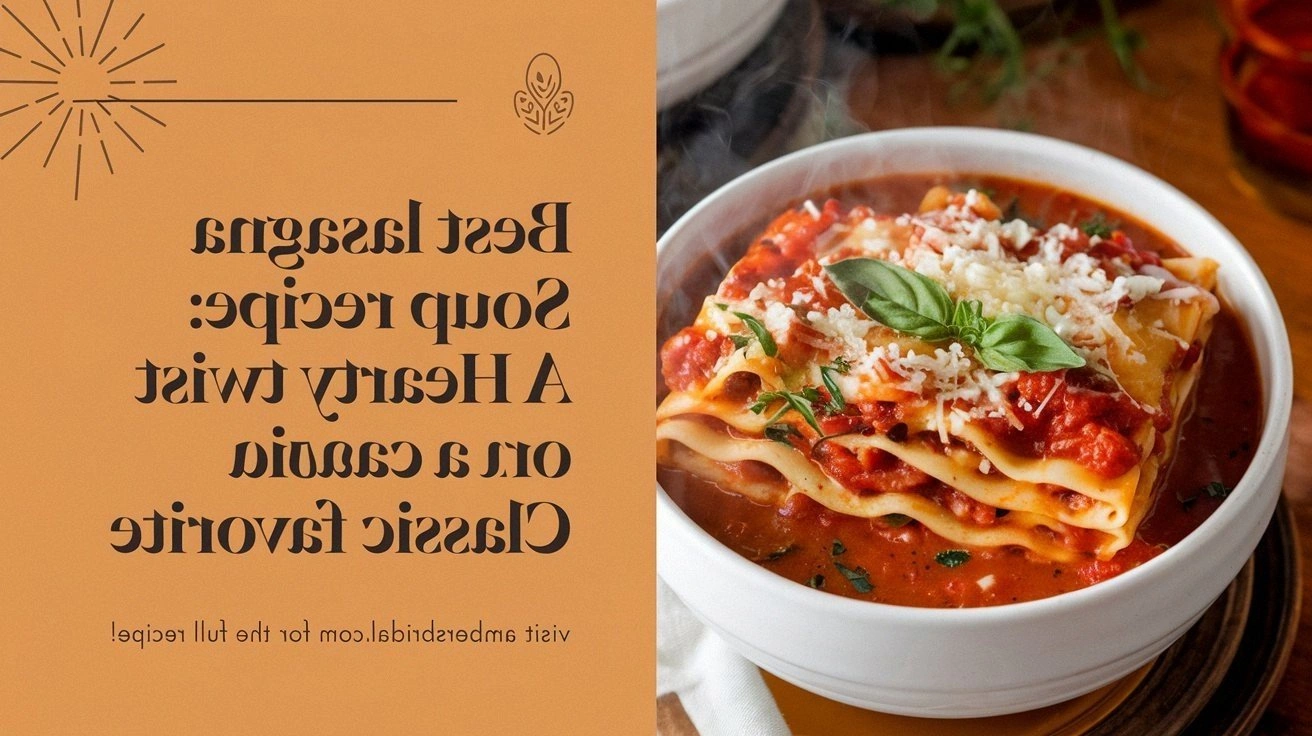
Best Lasagna Soup Recipe: A He
Picture this: it’s a rainy Thursday evening, the kind that makes you want to curl up in a bowl of something comforting. I was scrolling through Pinterest, half‑heartedly searching for a hearty dish, when a friend dared me to turn an ordinary lasagna into a soup. I laughed, but the idea stuck—why not bring all those beloved layers into a single pot? That night, I set out to create a lasagna soup that would make the kitchen smell like a cozy Italian trattoria and taste like a family secret.
I started with a base of browned ground beef, its sizzling aroma cutting through the damp air. The tomato sauce simmered, thickening into a rich, velvety blanket that clung to every noodle. I tossed in a medley of vegetables—carrots, celery, and onions—each adding crunch and sweetness that danced against the savory meat. The final flourish was a swirl of melted mozzarella and a sprinkle of parmesan, the cheeses melting into silky ribbons that made every spoonful feel like a hug.
What makes this version stand out? It’s the blend of textures and the balance of flavors. The pasta is cooked al dente, so it holds its shape yet yields to the broth. The sauce is layered with herbs that give it depth without overpowering the dish. And the best part? It’s a crowd‑pleaser that can be made in a single pot, saving you time and clean‑up. I dare you to taste this and not go back for seconds. This is hands down the best version you'll ever make at home, and I’m not exaggerating.
If you've ever struggled with lasagna, you’re not alone—often the layers get soggy or the sauce is too thin. I’ll be honest: I ate half the batch before anyone else got to try it. Picture yourself pulling this out of the pot, the whole kitchen smelling incredible, and seeing that the noodles float like tiny boats, each spoonful a mini adventure. Stay with me here—this is worth it. Let me walk you through every single step—by the end, you'll wonder how you ever made it any other way.
What Makes This Version Stand Out
- Taste: The sauce is a symphony of tomatoes, herbs, and a touch of red pepper flakes that gives it a subtle kick. The cheeses melt into a creamy ribbon that coats the noodles like velvet.
- Texture: The pasta remains firm, offering a satisfying bite against the soft, savory broth. The vegetables add a pleasant crunch that prevents the soup from becoming mushy.
- Convenience: One pot, one pan—no extra dishes to wash. This recipe turns a classic comfort food into a quick, fuss‑free dinner.
- Uniqueness: The addition of a small amount of ricotta at the end creates a luxurious mouthfeel that sets this soup apart from typical tomato‑based soups.
- Ingredient Quality: Using fresh basil and a good quality tomato sauce makes a noticeable difference, giving the soup a bright, authentic flavor.
- Make‑Ahead Potential: The soup keeps well in the fridge for up to 4 days and freezes beautifully, making it perfect for meal prep.
Alright, let's break down exactly what goes into this masterpiece…
Inside the Ingredient List
The Flavor Base
Ground beef is the cornerstone of this soup. It provides a hearty, meaty foundation that anchors every other element. If you’re aiming for a leaner option, swap it for ground turkey or a blend of pork and beef. Remember, the fat content influences the richness; too little and the broth will feel flat. If you skip the meat entirely, the soup will lose that comforting depth, turning it into a simple tomato broth.
The Texture Crew
Pasta is the star of the texture game. I recommend using small shells or elbow macaroni, as they hold their shape well in broth. If you prefer a gluten‑free version, quinoa or lentils can substitute, but the cooking time will change. The vegetables—carrots, celery, and onions—add bite and sweetness. Dice them finely so they cook evenly but still retain a slight crunch. Skipping them will make the soup feel one‑dimensional.
The Unexpected Star
Ricotta isn’t a typical ingredient in soups, but it brings a silky, creamy texture that elevates every spoonful. A tablespoon of ricotta per serving adds a luxurious mouthfeel. If you’re lactose intolerant, try a dairy‑free ricotta or a small amount of Greek yogurt. Using too much ricotta can make the soup overly thick, so measure carefully.
The Final Flourish
Mozzarella and parmesan are the finishing touches that create that gooey, melty sensation. Melted mozzarella coats the pasta like a blanket, while parmesan adds a salty, nutty finish. If you’re vegan, mozzarella can be replaced with a plant‑based cheese that melts well. A pinch of fresh basil at the end brightens the flavor profile, giving the soup a fresh, herbal note.
Everything's prepped? Good. Let's get into the real action...
The Method — Step by Step
- Heat a large Dutch oven over medium‑high heat. Add a splash of olive oil, then crumble in the ground beef. Sauté until browned and crumbly, stirring frequently. The meat should be a deep mahogany color, not a pale gray. This step locks in flavor and creates a base for the sauce.
- Add diced onions, carrots, and celery. Cook for 5 minutes until the vegetables soften and the onions become translucent. The aroma should be sweet and inviting. If you prefer a sweeter broth, add a teaspoon of sugar at this point. The vegetables will release their natural sugars, enriching the soup.
- Stir in crushed tomatoes, tomato sauce, and a splash of beef broth. Bring to a gentle boil, then reduce heat to low. Let it simmer for 15 minutes, allowing the flavors to meld. This is the moment of truth—if the broth is too thin, let it reduce a bit more. The sauce should be thick enough to coat the back of a spoon.
- Add the pasta to the pot. Stir to combine, then cover and cook for 8–10 minutes until the pasta is al dente. If you’re using gluten‑free pasta, check the package for cooking times. Stir occasionally to prevent sticking. The pasta should still have a slight bite, not be mushy.
- Stir in the ricotta, mozzarella, and parmesan. The cheeses should melt into a creamy, glossy coating that clings to each noodle. If you find the soup too thick, add a splash of milk or broth to reach your desired consistency. Let it simmer for another 2 minutes to meld the cheeses together.
- Taste and season with salt, pepper, and a pinch of red pepper flakes if you like heat. The soup should feel balanced—savory, slightly sweet, and aromatic. If it feels too acidic, a teaspoon of sugar or a splash of balsamic vinegar can mellow it. The final touch is a handful of fresh parsley for color and freshness.
- Serve hot, ladling the soup into bowls and topping each with a drizzle of olive oil and a sprinkle of extra parmesan. Pair with crusty bread for dipping, and you’ve got a meal that feels like a hug in a bowl. Watch the steam rise—this is the scent of comfort, the sound of a home that’s been cooking all day.
That's it — you did it. But hold on, I've got a few more tricks that'll take this to another level…
Insider Tricks for Flawless Results
The Temperature Rule Nobody Follows
Cooking the meat over medium‑high heat creates a caramelized crust that adds depth. Too low, and the meat stays raw inside; too high, and it burns. I always let the pan heat up before adding the beef. The goal is a golden brown that locks in juices. If you’re unsure, test with a small piece—if it sizzles, you’re good.
Why Your Nose Knows Best
Before you add the pasta, give the broth a sniff. It should smell like ripe tomatoes and herbs, not raw onions. A good aroma signals that the sauce has developed. If the scent is off, let it simmer a bit longer to bring out the natural sweetness of the tomatoes.
The 5-Minute Rest That Changes Everything
After cooking, let the soup sit for five minutes before serving. This rest allows the flavors to settle and the pasta to absorb the remaining liquid. A friend once skipped this step and the soup tasted rushed. The rest is subtle but essential.
Keep the Cheese in the Bowl
Instead of melting the cheeses in the pot, place small cubes of mozzarella and parmesan in the serving bowls and let them melt in the residual heat. This creates a gooey center that’s impossible to resist. I’ve seen guests beg for a second bowl when they see the melted cheese dripping down the sides.
Use Fresh Herbs Over Dried
Fresh basil and oregano give a bright, clean flavor that dried herbs can’t match. Add them at the end of cooking to preserve their aroma. If you’re short on time, dried herbs work, but sprinkle them just before serving to keep the flavor punchy.
Creative Twists and Variations
This recipe is a playground. Here are some of my favorite ways to switch things up:
Spicy Mexican Lasagna Soup
Swap the beef for ground turkey and add a tablespoon of taco seasoning. Replace the tomatoes with a can of diced tomatoes and corn. Top with shredded cheddar and a dollop of sour cream. This version delivers a bold, zesty kick that’s perfect for a casual gathering.
Vegetarian Delight
Omit the meat entirely and add a cup of chopped spinach and a handful of sliced mushrooms. Use vegetable broth instead of beef broth. Finish with a sprinkle of feta cheese. The result is a hearty, plant‑based soup that still feels like comfort food.
Cheese Lover’s Edition
Double the mozzarella and add a handful of shredded provolone. Finish with a drizzle of truffle oil for an indulgent aroma. The cheese melts into a silky coating that makes every spoonful decadently rich.
Low‑Carb Variation
Replace the pasta with zucchini noodles or shirataki noodles. Use a low‑sodium tomato sauce and skip the ricotta to keep carbs down. The texture remains satisfying, and the soup still feels like a comforting lasagna.
Breakfast Lasagna Soup
Add a handful of chopped bacon and a splash of milk to create a creamy base. Sprinkle shredded cheddar and a dash of paprika. Serve with a side of toasted bread for a breakfast twist that’s both savory and satisfying.
Storing and Bringing It Back to Life
Fridge Storage
Cool the soup completely before transferring to an airtight container. Store in the refrigerator for up to 4 days. The flavors will continue to meld, making the soup even richer the next day.
Freezer Friendly
Pack the soup in freezer‑safe containers, leaving a little headspace for expansion. It keeps well for up to 3 months. Thaw overnight in the refrigerator before reheating.
Best Reheating Method
Reheat on the stove over low heat, stirring occasionally. Add a splash of water or broth if the soup has thickened. A tiny splash of water before reheating steams back to perfection, keeping the pasta from drying out.