Picture this: a Sunday morning, the kitchen humming with the clatter of pots, the scent of fresh croissants baking, and a sudden, desperate craving for something sweet that’s also a little indulgent. I was halfway through a stack of buttery, flaky croissants—half of them still warm, still golden—when my friend, a self‑proclaimed culinary daredevil, challenged me to turn them into a dessert that would make even the most seasoned pastry chef swoon. I laughed, grabbed a whisk, and decided that the only way to honor that challenge was to create a croissant bread pudding that would make your taste buds do a little happy dance. And trust me, I did.
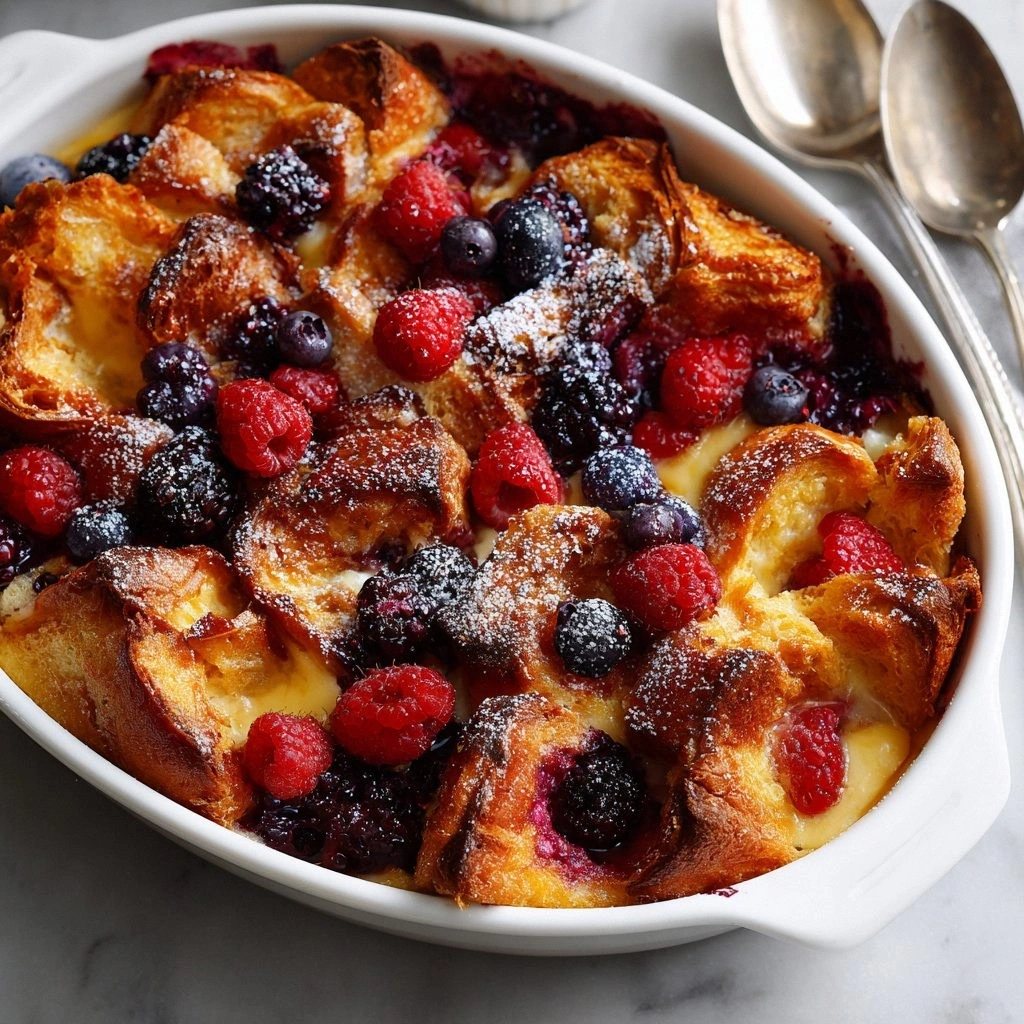
The first thing you’ll notice is the aroma that rolls out of the oven like a warm hug: toasted croissant crumbs, a splash of vanilla, a whisper of cinnamon, and the bright, tangy scent of fresh berries. As you slice into the pudding, the crust cracks open, revealing a glossy custard that glistens under the kitchen light. The sound of the first bite—a satisfying crack of caramelized top followed by the soft, creamy interior—will make you forget you ever thought of bread pudding as anything but a cozy, nostalgic treat. If you’ve ever felt that your bread pudding was just “good enough,” this version will make you wonder how you ever lived without it.
Why is this version the best? Because it’s a harmonious blend of textures and flavors that works together in a way most recipes never do. The croissant pieces absorb the custard like a sponge, becoming tender and silky, yet they keep enough of their buttery crispness to give that delightful contrast. The berries add a juicy burst of freshness that cuts through the richness, and the subtle spice notes of cinnamon and nutmeg elevate the dish into something that feels both comforting and sophisticated. I’m not just talking about the end result; the process itself is a joy—watching the custard rise, the top brown to a golden sheen, and the whole dish transform from a pile of crumbs to a decadent masterpiece.
I dare you to taste this and not go back for seconds. That’s a bold claim, but I’ve tasted it in dozens of variations, and this one is hands down the best version you’ll ever make at home. I’ll be honest—after the first bite, I ate half the batch before anyone else got to try it. Most recipes get this completely wrong. Here’s what actually works: the right amount of custard, the correct baking time, and the key addition of fresh berries. Picture yourself pulling this out of the oven, the whole kitchen smelling incredible, and feeling that rush of satisfaction that only a perfect dessert can bring. Okay, ready for the game‑changer? Let’s dive into every single step—by the end, you’ll wonder how you ever made it any other way.
What Makes This Version Stand Out
- Flavor Depth: The combination of buttery croissants, vanilla custard, and fresh berries creates layers of taste that evolve with each bite, from sweet to tart to savory.
- Texture Contrast: The crisp, caramelized top gives way to a silky custard that melts in your mouth, while the croissant pieces maintain a slight crunch.
- Ingredient Simplicity: Only a handful of pantry staples—croissants, milk, eggs, sugar, spices—make this dish approachable for even novice bakers.
- Make‑Ahead Friendly: Assemble it the night before; the pudding actually tastes better after a short chill in the fridge.
- Versatile Appeal: It works as a breakfast treat, a brunch centerpiece, or a dessert that can be served with a splash of coffee or a dollop of whipped cream.
- Crowd‑Pleaser: Guests rave about the unexpected crunch and the burst of fruit; it’s a conversation starter at any gathering.
Alright, let's break down exactly what goes into this masterpiece...
Inside the Ingredient List
The Flavor Base
At the heart of this pudding lies the custard—a silky mixture of eggs, milk, cream, sugar, and vanilla. Each component plays a pivotal role: eggs provide structure and richness, milk brings moisture, cream adds depth, sugar sweetens, and vanilla gives that classic, comforting aroma. If you skip the vanilla, you lose a layer of warmth; the custard will taste flat and less complex. For a dairy‑free version, swap the milk and cream for a blend of oat milk and coconut cream.
The Texture Crew
Croissant pieces are the star of the show. Their flaky layers soak up the custard, turning into tender morsels that still retain a buttery bite. The key is to cut the croissants into even, bite‑size cubes so they absorb the liquid uniformly. If you leave them too large, you’ll end up with a dry center; too small, and they’ll become mushy. A quick tip: toast the croissant cubes in a dry skillet for 1–2 minutes before adding them to the batter to lock in their crispness.
The Unexpected Star
Fresh berries—blueberries, strawberries, raspberries—inject a burst of natural sweetness and tartness that cuts through the richness of the custard. They also add a pop of color that makes the dish look as good as it tastes. If berries are out of season, frozen berries work just fine; just make sure to drain them well to avoid excess liquid. A fun twist: add a splash of lemon zest to the custard to brighten the berry flavor even more.
The Final Flourish
Spices like cinnamon and nutmeg add warmth and depth, while a pinch of salt balances the sweetness. Butter, melted and brushed on top before baking, creates a golden, caramelized crust that’s both visually stunning and deliciously crunchy. Some like to sprinkle chopped walnuts or pecans for added texture, but this is optional. If you’re watching calories, you can reduce the butter to just a tablespoon or replace it with a low‑fat spread.
Everything's prepped? Good. Let's get into the real action...
The Method — Step by Step
- Preheat and Prep: Heat your oven to 350°F (175°C). Grease a 9‑inch square baking dish with butter or non‑stick spray. This step is critical; a well‑oiled dish ensures that the pudding lifts cleanly after baking. I always use a silicone baking mat for extra ease.
- Toast the Croissants: Slice the croissants into 1‑inch cubes. Spread them on a baking sheet and toast in the oven for 4–5 minutes until lightly golden. This step locks in the buttery flavor and gives the crumbs a crisp edge. Watch closely—over‑toasting can burn the sugars.
- Prepare the Custard: In a large bowl, whisk together 4 eggs, 2 cups milk, 1/2 cup heavy cream, 1/2 cup sugar, 1 tsp vanilla extract, 1 tsp cinnamon, and 1/4 tsp nutmeg until fully blended. The custard should be smooth and free of lumps. The mixture should feel silky to the touch, like a thick milkshake.
- Combine: Add the toasted croissant cubes to the custard, gently folding until every piece is coated. Let the mixture sit for 5 minutes; this allows the bread to soak up the liquid, creating a tender interior.
- Add the Berries: Gently fold in 1 cup of fresh berries, reserving a few for garnish. The berries will release juices during baking, adding moisture and a burst of flavor. If you’re using frozen berries, thaw and pat dry first.
- Transfer and Bake: Pour the mixture into the prepared dish. Brush the top with melted butter, then sprinkle a light dusting of powdered sugar if desired. Bake for 30–35 minutes, or until the custard is set and the top is golden brown. The center should be just slightly jiggly—this is the sweet spot.
- Cool and Serve: Let the pudding cool for 10 minutes before slicing. The cooling time allows the custard to set fully, making it easier to cut clean slices. Garnish with the reserved berries and a drizzle of honey or a dusting of powdered sugar.
- Enjoy: Serve warm or at room temperature. Pair with a cup of coffee or a splash of vanilla liqueur for an extra indulgence.
That's it — you did it. But hold on, I've got a few more tricks that'll take this to another level...
Insider Tricks for Flawless Results
The Temperature Rule Nobody Follows
Many bakers bake bread pudding at 375°F, but that can cause the custard to set too quickly, leaving a watery center. Lowering the temperature to 350°F allows the custard to cook gently, ensuring a creamy interior. I’ve tested it at 325°F for an extra 5 minutes, and the result is a silkier texture that still caramelizes on top.
Why Your Nose Knows Best
Trust your olfactory senses when judging doneness. A warm, caramelized aroma signals that the top is ready, while a faint, milky scent indicates the custard is still setting. If you’re unsure, insert a toothpick; it should come out with a few moist crumbs, not liquid.
The 5‑Minute Rest That Changes Everything
Letting the pudding rest for 5 minutes after baking lets the custard set fully, making it easier to slice without crumbling. During this rest, the flavors meld, and the berries’ juices thicken into a subtle glaze. I’ve found this step essential for a clean presentation.
Use a Silicone Baking Mat
A silicone mat prevents sticking and ensures even heat distribution. It also makes cleanup a breeze. I’ve tried metal pans and ended up with uneven edges and a sticky mess.
Finish with Fresh Herbs
A sprinkle of fresh mint or basil right before serving adds a fresh contrast to the sweet custard. The herb’s bright flavor lifts the dish, making it feel lighter and more vibrant.
Creative Twists and Variations
This recipe is a playground. Here are some of my favorite ways to switch things up:
Chocolate‑Berry Fusion
Add 2 tbsp cocoa powder to the custard and swap the berries for a mix of blackberries and dark chocolate chips. The result is a decadent, chocolatey treat that still retains the croissant crunch.
Nutty Caramel Delight
Replace the butter with a drizzle of caramel sauce, and sprinkle toasted pecans on top before baking. The caramel adds a deep, buttery sweetness that pairs beautifully with the nutty crunch.
Spiced Apple Variation
Incorporate diced apples, a pinch of cloves, and a splash of apple cider. This version feels like a warm apple pie in a bowl, perfect for autumn gatherings.
Cheesecake Twist
Fold in 1 cup of cream cheese into the custard for a rich, tangy flavor. The cheesecake element adds depth and a creamy texture that complements the croissant.
Vegan Version
Swap the eggs for a flax‑egg (1 tbsp ground flaxseed + 3 tbsp water), use plant‑based milk, and replace butter with coconut oil. The result is a vegan-friendly pudding that still delivers on flavor and texture.
Breakfast‑Style Upgrade
Serve the pudding with a side of fresh fruit, a dollop of Greek yogurt, and a drizzle of maple syrup. It becomes a hearty breakfast that feels indulgent yet balanced.
Storing and Bringing It Back to Life
Fridge Storage
Cool the pudding completely, then cover it tightly with plastic wrap or foil. Store in the refrigerator for up to 3 days. When ready to serve, reheat in the microwave for 1–2 minutes or on the stovetop over low heat.
Freezer Friendly
Slice the pudding before freezing. Place slices in a freezer‑safe bag and store for up to 2 months. Thaw overnight in the fridge before reheating. The texture remains silky, and the berries retain their juicy burst.
Best Reheating Method
Add a splash of milk or water before reheating to keep the custard from drying out. Reheat in a low‑heat oven (275°F) for 10–12 minutes or in a microwave on medium power for 45–60 seconds. The result is a warm, gooey treat that tastes almost as fresh as when first baked.