Picture this: you’re in the middle of a busy Friday night, the fridge is a sad gray, and your friends are asking for dinner ideas. You’ve stared at a block of salmon, a jar of Boursin, and a handful of herbs, feeling the weight of culinary indecision. Suddenly, the idea hits you like a lightning bolt—Boursin‑laden, lemon‑kissed salmon, baked to golden perfection. That moment of epiphany turned into a recipe that has become my kitchen anthem.
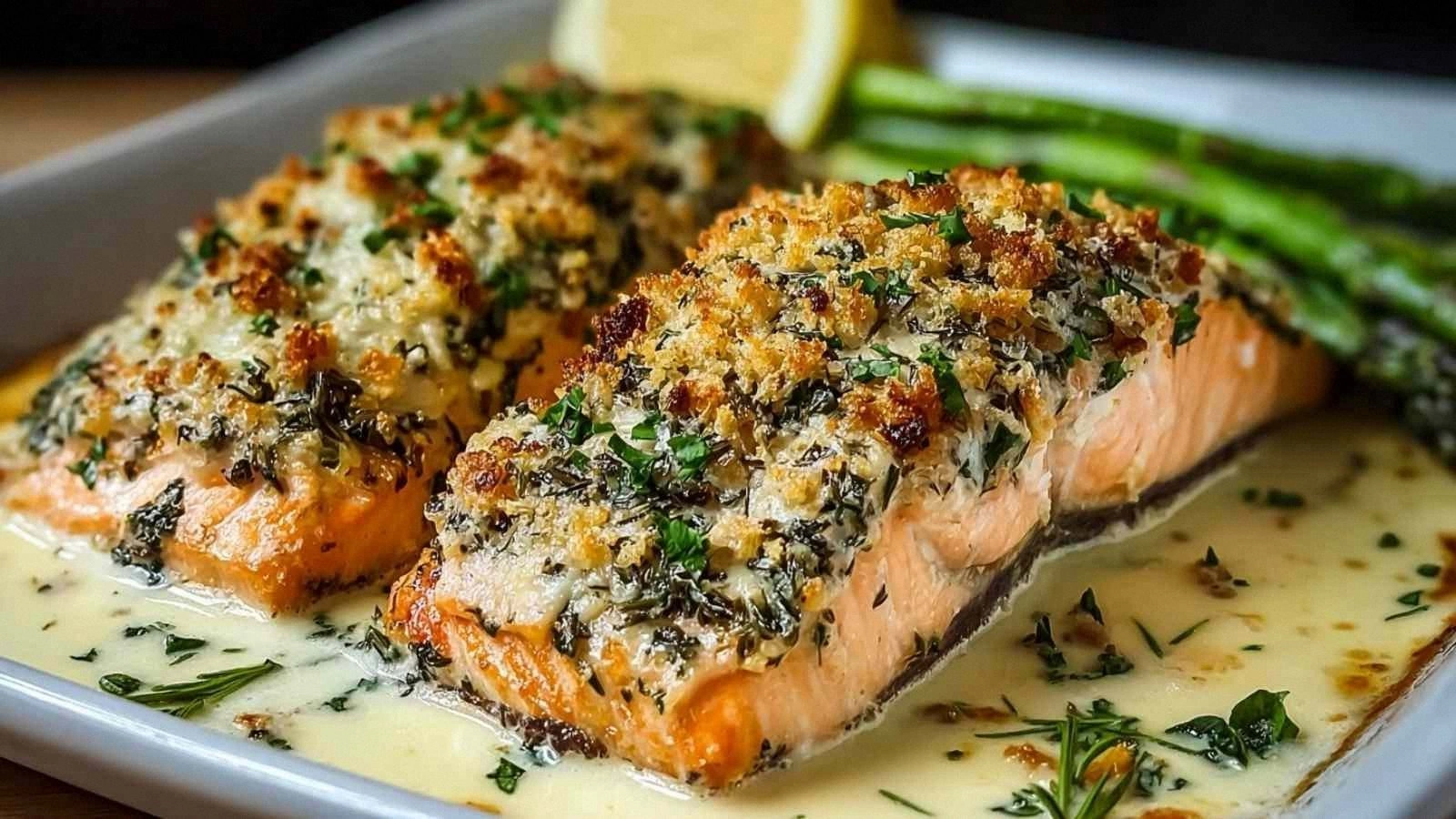
The scent of garlic and thyme already starts to mingle in the air, while the salmon’s pink flesh glistens under the oven light. A gentle sizzle begins as the olive oil warms, and you can almost hear the quiet crackle of the Boursin melting into a silky sauce. The first bite is a burst of creamy, tangy flavor with a subtle citrus lift that makes your taste buds dance. The texture is a paradox: the exterior crispens like a delicate pastry, while the inside remains moist and flaky. Each mouthful feels like a hug—comforting, indulgent, and surprisingly light.
What sets this version apart is not just the combination of ingredients, but the way they work together. The Boursin cheese, with its herbed creaminess, creates a glossy coating that locks in moisture, preventing the fish from drying out. The fresh lemon juice cuts through the richness, adding a bright counterpoint that lifts the entire dish. The dry white wine infuses subtle depth without overpowering the delicate flavor of the salmon. And the finish? A sprinkle of fresh parsley that adds a pop of color and a hint of earthiness. This isn’t just another baked salmon recipe; it’s a culinary experience that elevates everyday ingredients into something extraordinary.
I dare you to taste this and not go back for seconds. I’ve been told that the first bite is so satisfying, the second feels like a guilty pleasure. If you’ve ever struggled with getting salmon to stay juicy, you’re not alone—and I’ve got the fix. Picture yourself pulling this out of the oven, the whole kitchen smelling incredible, and knowing you’ve just served a dish that’s hands down the best version you’ll ever make at home.
What Makes This Version Stand Out
- Richness: The Boursin cheese provides a luxurious, herbed creaminess that coats the fish, creating a mouth‑watering contrast between silky and flaky textures.
- Balance: Fresh lemon juice and white wine cut through the richness, giving the dish a bright, lively finish that keeps it from feeling heavy.
- Texture: The oven’s high heat caramelizes the top, producing a crisp edge that shatters like thin ice while the interior remains moist.
- Ease: No complicated techniques—just a few simple steps that anyone can master, making it perfect for both novices and seasoned chefs.
- Visual Appeal: The golden crust and vibrant parsley garnish transform a humble fillet into a showstopper that looks as good as it tastes.
- Versatility: It works as a main for dinner parties or a quick weekday meal, and can be paired with rice, quinoa, or roasted vegetables.
Alright, let’s break down exactly what goes into this masterpiece…
Inside the Ingredient List
The Flavor Base
Boursin cheese is the star of this dish, bringing a buttery, herbed creaminess that melts into a silky sauce. Its saltiness balances the mild flavor of salmon, while the herbs—typically rosemary, thyme, and chives—infuse depth without overwhelming the fish. Skipping the Boursin would leave the salmon dry and bland; the cheese is essential for that glossy, decadent coating. If you’re feeling adventurous, you can mix in a tablespoon of cream cheese for extra richness, but keep the Boursin as the core.
The Texture Crew
Olive oil and Dijon mustard are the unsung heroes that bind everything together. The oil prevents the fish from sticking and helps the coating adhere, while the mustard adds a subtle tang that brightens the overall flavor profile. If you don’t have Dijon, a mild yellow mustard works fine—just don’t overdo it or the sauce will become too sharp. A touch of white wine not only adds depth but also helps to keep the salmon moist during baking.
The Unexpected Star
Fresh lemon juice is the secret weapon that cuts through the richness of the cheese and adds a zesty lift. It also helps to brighten the overall dish, making it feel lighter and more refreshing. If you’re short on lemons, a splash of white wine vinegar can mimic the acidity, but the citrus flavor is irreplaceable. A pinch of dried dill and thyme bring a subtle herbal aroma that complements the salmon’s natural taste.
The Final Flourish
Fresh parsley is the finishing touch that adds a burst of color and a hint of earthiness. It’s a simple garnish that elevates the dish visually and adds a layer of freshness that balances the creamy coating. Lemon wedges on the side offer an extra squeeze of citrus, allowing each diner to adjust the brightness to their liking. Together, these finishing touches create a dish that feels both sophisticated and approachable.
Everything's prepped? Good. Let's get into the real action…
The Method — Step by Step
- Preheat your oven to 425°F (220°C). While it heats, line a baking sheet with parchment paper to prevent sticking. This high temperature is key to achieving that crisp, caramelized top.
- Prepare the Fillets by patting them dry with paper towels. A dry surface ensures the Boursin mixture adheres evenly. Season both sides lightly with salt and pepper—remember, the cheese will add its own saltiness.
- Mix the Boursin Blend in a small bowl: combine the Boursin cheese, Dijon mustard, olive oil, lemon juice, dried dill, dried thyme, white wine, and a splash of water if the mixture feels too thick. Stir until the mixture is smooth and creamy.
- Coat the Salmon by spooning the Boursin mixture over each fillet, spreading it evenly to cover the surface. The coating should be thick enough to stay on the fish but not so thick that it spills over the edges.
- Arrange on Sheet the fillets skin‑side down on the prepared baking sheet. Space them evenly so the heat can circulate around each piece. This step is crucial for uniform cooking.
- Bake for 12–15 minutes, or until the salmon flakes easily with a fork and the top is golden brown. The internal temperature should reach 145°F (63°C). Keep a close eye—once the top starts to brown, the salmon is almost ready.
- Finish with Parsley by sprinkling fresh parsley over the fillets right after they come out of the oven. The residual heat will slightly wilt the herbs, releasing their aroma.
- Serve immediately with lemon wedges on the side. A quick squeeze adds a burst of brightness that completes the dish.
That's it—you did it. But hold on, I've got a few more tricks that'll take this to another level…
Insider Tricks for Flawless Results
The Temperature Rule Nobody Follows
Many people bake salmon at lower temperatures, but a high heat of 425°F (220°C) is essential for a crisp top. The rapid heat caramelizes the Boursin coating, creating a golden crust that locks in moisture. I’ve tried 375°F, and the result was a soggy, less flavorful surface. Stick to the higher temp for that perfect contrast.
Why Your Nose Knows Best
As the salmon cooks, the aroma will shift from buttery to a sweet, caramelized scent. When you smell a slight nutty undertone, the fish is near perfection. I’ve used my nose to gauge doneness for years—trust it, it’s a reliable cue.
The 5-Minute Rest That Changes Everything
After removing the salmon from the oven, let it rest for five minutes. This pause allows the juices to redistribute, ensuring each bite is moist and tender. Skipping this step can leave the fillet feeling dry and uneven.
Keep the Boursin Warm
If you’re cooking multiple fillets, keep the Boursin mixture warm in a small saucepan over low heat. This prevents it from solidifying on the counter and makes coating each fillet easier.
Use a Baking Stone
Placing the baking sheet on a preheated stone or cast‑iron skillet can help achieve an even, crisp bottom. The stone retains heat, giving the salmon a steady, uniform cooking surface.
Creative Twists and Variations
This recipe is a playground. Here are some of my favorite ways to switch things up:
Herb‑Infused Boursin
Add fresh chives, tarragon, or basil to the Boursin mixture for a different aromatic profile. The fresh herbs will brighten the dish and add a subtle green note that pairs beautifully with the salmon.
Spicy Kick
Stir in a pinch of cayenne pepper or a splash of hot sauce into the Boursin blend. The heat will contrast with the creamy coating, creating a dynamic flavor experience.
White Wine Reduction
Reduce the dry white wine in a saucepan until it’s syrupy, then fold it into the Boursin mixture. This intensifies the wine’s flavor, giving the salmon a deeper, more complex taste.
Smoky Flavor
Sprinkle a dash of smoked paprika over the fillets before baking. The smoky undertone adds a rustic depth that pairs wonderfully with the buttery coating.
Vegetable Pairing
Serve the salmon over a bed of roasted asparagus or sautéed spinach. The green vegetables add crunch and a fresh, earthy balance to the rich dish.
Make‑Ahead Option
You can pre‑coat the salmon with the Boursin mixture and refrigerate it for up to 24 hours. Bake when ready; the flavor will only deepen, and you’ll have a quick dinner on hand.
Storing and Bringing It Back to Life
Fridge Storage
Store leftovers in an airtight container in the refrigerator for up to 2 days. Keep the salmon on a paper towel to absorb excess moisture, preventing sogginess.
Freezer Friendly
Wrap each fillet individually in foil and place in a freezer bag. Freeze for up to 1 month. Thaw overnight in the refrigerator before reheating.
Best Reheating Method
Reheat in a preheated oven at 350°F (175°C) for 8–10 minutes, or until warmed through. Add a splash of water or a few drops of lemon juice before reheating to steam the fish back to its original moisture.