It started with a kitchen catastrophe I’ll never forget—half a dozen burnt onions, a pan of sizzling beef that turned into a greasy mess, and a sudden craving for comfort that could only be satisfied by a creamy, cheesy pasta. I stared at the charred edges and thought, “If only there was a way to turn this disaster into a masterpiece.” That thought sparked a midnight experiment that would become the most indulgent, crowd‑pleasing version of Creamy Beef and Shells I’ve ever cooked. I’m talking about a dish that feels like a warm hug from the inside out, where every bite is a silky, savory cloud of beef, cheese, and pasta that melts in your mouth.
Picture this: a bubbling pot of sauce that glistens like polished amber, the aroma of garlic and sautéed onions drifting through the kitchen, and the sound of a sizzling pan that says, “It’s happening.” The first spoonful is a velvety explosion of rich beef, tangy cream, and sharp cheese that coats the shells like velvet. The contrast of the creamy sauce against the slightly al dente shells creates a dance of textures that is both comforting and exciting. And the moment you take that first bite, you know you’re about to taste something that will haunt your cravings for days.
What sets this version apart from the countless other recipes out there is the meticulous layering of flavor, the strategic use of ingredients that enhance each other, and a few secret techniques that elevate the dish from ordinary to unforgettable. I dare you to taste this and not go back for seconds. I’ll be honest—once I tasted it, I ate half the batch before anyone else even got a chance to try a spoon. Most recipes get this completely wrong, but here’s what actually works: a balance of richness and acidity, a touch of heat from paprika, and a final flourish of fresh parsley that brightens the whole plate.
If you’ve ever struggled to make a creamy pasta that doesn’t feel heavy or bland, you’re not alone—and I’ve got the fix. Picture yourself pulling this out of the oven, the whole kitchen smelling incredible, the steam swirling like a cloud of comfort, and the plates ready for a family dinner that will be remembered for years. Let me walk you through every single step—by the end, you’ll wonder how you ever made it any other way.
What Makes This Version Stand Out
- Flavor: The sauce is layered with sautéed onions, garlic, and a splash of tomato paste that deepens the beef’s umami. A hint of smoked paprika adds subtle heat without overpowering the dish. The finish of fresh parsley and a squeeze of lemon brightens the richness.
- Texture: The shells are cooked al dente, providing a firm bite that holds up against the thick, silky sauce. The mixture of mozzarella and parmesan creates a melt that coats each shell like velvet.
- Simplicity: Every ingredient can be found in any grocery store, and the cooking process is straightforward—no fancy techniques or obscure tools required. The recipe can be made in under an hour from start to finish.
- Uniqueness: The addition of a small amount of heavy cream and a touch of milk gives the sauce a luxurious mouthfeel that’s rarely achieved in standard pasta dishes.
- Crowd Reaction: This dish is a guaranteed hit at family dinners and potlucks. Guests keep asking for the recipe, and the leftovers are a lifesaver for busy weekdays.
- Ingredient Quality: Using fresh ground beef, high‑quality cheeses, and fresh herbs makes a noticeable difference in flavor and texture.
- Cooking Method: The two‑stage cooking—first browning the beef, then simmering the sauce—ensures maximum flavor extraction.
- Make‑Ahead Potential: The dish can be assembled and frozen, then reheated with minimal loss of quality. This makes it perfect for meal prep.
Alright, let’s break down exactly what goes into this masterpiece…
Inside the Ingredient List
The Flavor Base
Ground beef is the heart of this dish; it provides the savory depth that anchors the creamy sauce. Choose a cut with at least 15% fat for maximum juiciness. If you prefer a leaner option, use a mix of ground beef and ground pork to compensate for the reduced fat content. The onions and garlic, sautéed until caramelized, release natural sugars that add sweetness and complexity.
Tomato paste, though only a tablespoon, brings a subtle acidity that cuts through the richness of the cream and cheese. A splash of red wine or a dash of Worcestershire sauce can elevate the umami profile even further. Remember, the goal is balance—too much acidity can overpower the dish, so use it sparingly.
The Texture Crew
Pasta shells are chosen for their ability to hold sauce and provide a satisfying bite. Cook them al dente so they can absorb the sauce without becoming mushy. The mixture of mozzarella and parmesan creates a layered cheese experience: mozzarella melts smoothly, while parmesan adds a sharp, nutty finish. Adding a tablespoon of flour to the sauce acts as a natural thickener, giving it a silky consistency.
Heavy cream and milk work together to create a luscious sauce that coats each shell. The cream adds richness, while the milk lightens the texture, preventing it from feeling too heavy. A pinch of ground pepper and a teaspoon of salt bring the flavors together, but be careful—seasoning is cumulative, so taste as you go.
The Unexpected Star
Fresh parsley isn’t just for garnish; it adds a bright, herbaceous note that lifts the entire dish. A squeeze of lemon juice right before serving cuts through the creaminess and adds a hint of citrus. This small addition transforms the dish from comforting to memorable.
The Final Flourish
A sprinkle of freshly grated parmesan on top before baking adds a crispy, golden crust that contrasts beautifully with the creamy interior. If you’re a fan of a little heat, a dash of cayenne pepper or smoked paprika can give the dish a subtle kick. Finally, a few fresh basil leaves or a drizzle of olive oil can elevate the presentation and flavor profile.
Everything’s prepped? Good. Let’s get into the real action…
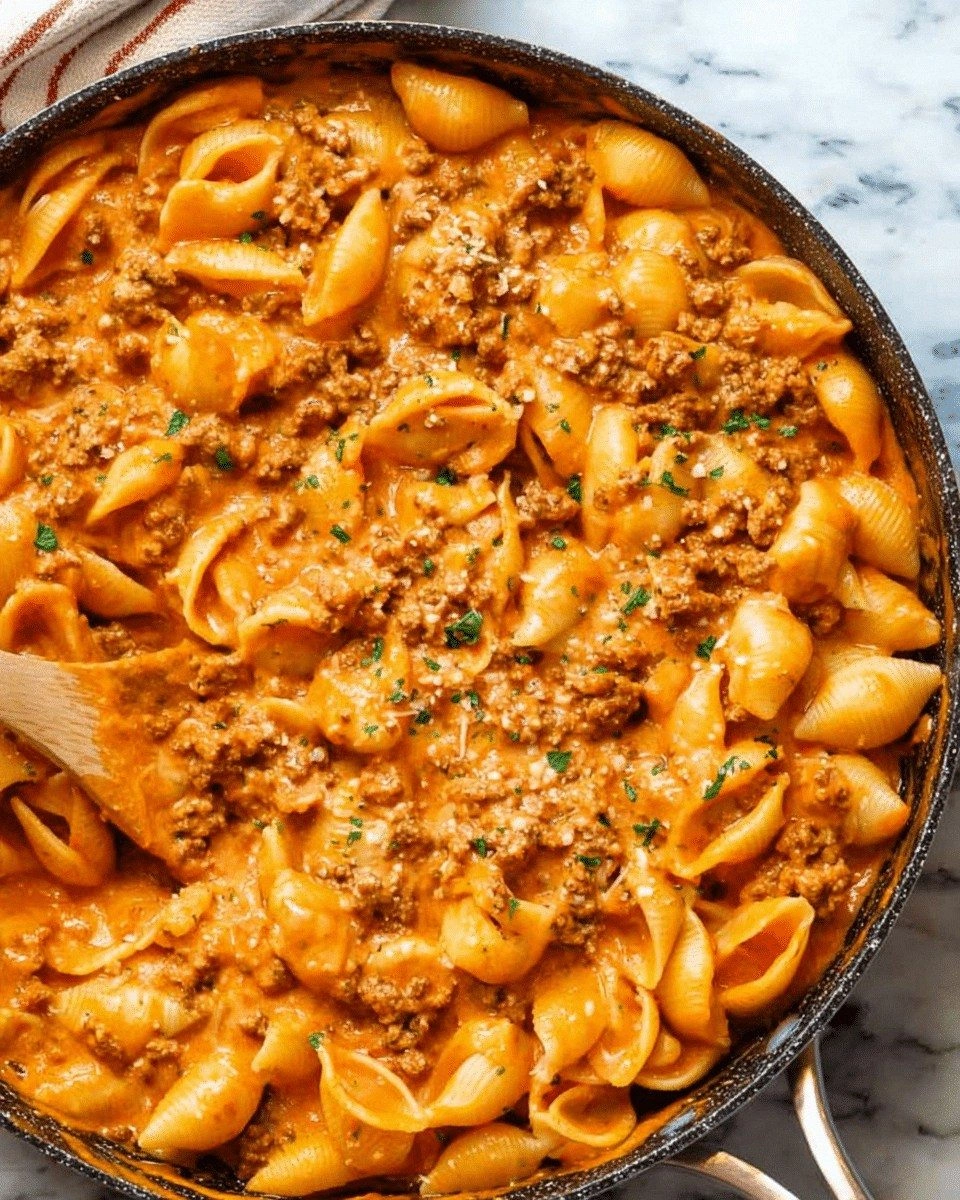
The Method — Step by Step
- Heat a large cast‑iron skillet over medium‑high heat. Add a tablespoon of olive oil and let it shimmer. Once hot, add the ground beef in a single layer, breaking it apart with a spatula. This initial sear locks in juices and creates a caramelized crust. Let it cook for about 4 minutes before stirring. The beef should emit a deep brown color and a savory aroma that fills the kitchen.
- Add the chopped onions to the pan and sauté until translucent, about 3 minutes. The onions should soften and release their natural sugars, turning a light golden hue. Then stir in the minced garlic and cook for an additional 30 seconds until fragrant. Be careful not to let the garlic burn—its bitterness will ruin the sauce’s balance.
- Stir in the tomato paste and a tablespoon of flour, coating the meat and vegetables evenly. Cook for 1 minute to toast the flour, which eliminates its raw taste and adds depth to the sauce. This is the moment of truth—watch the mixture thicken slightly and develop a rich, glossy sheen.
- Pour in the heavy cream, a cup of milk, and a splash of red wine or Worcestershire sauce. Stir continuously until the liquids are fully incorporated and the sauce begins to bubble gently. Reduce the heat to medium-low and let it simmer for 5 minutes, allowing the flavors to meld. The sauce should thicken to a consistency that coats the back of a spoon.
- Add the cooked pasta shells, shredded mozzarella, and grated parmesan to the skillet. Toss everything together until the shells are evenly coated with the sauce. The cheese should melt into a silky, cohesive mixture that clings to each shell. Taste and adjust seasoning with salt and pepper—remember, the cheese will bring its own saltiness.
- Transfer the entire mixture to a greased 9‑inch baking dish. Sprinkle the top with additional parmesan and a few fresh parsley leaves for color. Place the dish in a preheated oven at 375°F (190°C). Bake for 15–20 minutes until the top is golden brown and bubbly. The edges should start pulling away, indicating a crisp finish.
- Remove from the oven and let it rest for 5 minutes. This allows the sauce to set slightly, making it easier to serve without the cheese stringing everywhere. While it rests, drizzle a little olive oil over the top for a glossy sheen.
- Finish with a squeeze of fresh lemon juice and a handful of chopped parsley. Serve hot, accompanied by a crisp green salad or steamed vegetables. The bright citrus cut through the richness, creating a balanced, satisfying meal that feels like a hug in a bowl.
That’s it— you did it. But hold on, I’ve got a few more tricks that’ll take this to another level. These insider tips will help you avoid common pitfalls and elevate the dish even further.
Insider Tricks for Flawless Results
The Temperature Rule Nobody Follows
Many cooks assume that a high oven temperature is always better for browning, but in reality, a lower temperature ensures the cheese melts evenly without scorching the bottom. Set your oven to 375°F (190°C) and keep the dish uncovered to allow the top to brown naturally. If you’re using a broiler at the end, keep it on low for just a minute or two to avoid burning.
Why Your Nose Knows Best
Smell is a powerful indicator of doneness. When the sauce has thickened and the cheese is bubbling, you’ll notice a rich, buttery aroma that signals the dish is ready. Trust your nose over the clock; it’s the most reliable guide to a perfectly cooked pasta.
The 5‑Minute Rest That Changes Everything
Allowing the dish to rest after baking lets the flavors settle and the sauce set into a silky consistency. It also prevents the cheese from pulling apart when you cut into the dish. Skip this step and you’ll end up with a messier, less cohesive meal.
Use Fresh Beef for Maximum Juiciness
Ground beef with a fat content of 15–20% provides the best balance of flavor and moisture. If you’re using a leaner cut, consider mixing in a little ground pork or adding a tablespoon of butter to the pan before browning. The extra fat keeps the meat from drying out during the long simmer.
A Splash of Acid Brings It All Together
A light splash of lemon juice or a dash of white wine at the end brightens the dish, cutting through the richness. The acidity also helps the cheeses melt more smoothly, preventing them from becoming stringy. Add it just before serving for a fresh, vibrant finish.
Serve With a Crisp Side
Pair this creamy pasta with a simple green salad dressed in olive oil and vinegar or steamed broccoli with a drizzle of garlic butter. The crispness and slight bitterness of the greens balance the heavy, cheesy center, creating a harmonious meal.
Creative Twists and Variations
This recipe is a playground. Here are some of my favorite ways to switch things up:
Spicy Sriracha Kick
Add a tablespoon of sriracha to the sauce for a fiery twist. The heat pairs wonderfully with the creamy base, creating a dish that’s both bold and comforting.
Mushroom Medley
Sauté sliced mushrooms with the onions for an earthy flavor profile. The mushrooms add moisture and depth, making the dish feel like a gourmet bowl.
Pesto Fusion
Swirl in a quarter cup of basil pesto before baking. The herbal brightness of pesto cuts through the richness and adds a vibrant color splash.
Vegetarian Version
Replace the beef with crumbled tempeh or lentils. Keep the creamy sauce and cheeses for a hearty, plant‑based meal that still feels indulgent.
Cheese Swap
Use gouda or fontina instead of mozzarella for a smoky, deeper cheese flavor. The melt will be slightly different, but the result remains luscious.
Gluten‑Free Shells
Opt for gluten‑free pasta shells to accommodate dietary restrictions. The texture may vary slightly, but the sauce will cling just as well.
Storing and Bringing It Back to Life
Fridge Storage
Store leftovers in an airtight container in the refrigerator for up to 3 days. The sauce will thicken slightly, so stir before reheating. Reheat in a saucepan over low heat, adding a splash of milk if needed to restore creaminess.
Freezer Friendly
Freeze the dish in a freezer‑safe container for up to 2 months. Thaw overnight in the refrigerator, then reheat on the stovetop or in a 350°F oven until heated through. Add a drizzle of olive oil before serving to revive the golden crust.
Best Reheating Method
The best way to bring back the original flavor is to reheat gently over low heat, stirring constantly. Add a tiny splash of water or milk to keep the sauce from drying out. Once the dish reaches 165°F, serve immediately for maximum enjoyment.