Picture this: I was halfway through a midnight snack run, juggling a bag of groceries, a broken blender, and a stubborn craving for something sweet yet tropical. I had a handful of passionfruit in my fridge, a jar of thickened cream, and a box of plain flour that had seen better days. My kitchen was a chaotic orchestra of sizzling pans, clattering utensils, and the faint scent of vanilla. In that moment, I decided to throw everything into a bowl, whisk, and an oven, and let the universe decide if I’d end up with a culinary masterpiece or a disaster worthy of a viral meme. The result? A cloud of golden, airy cookies that burst with a tangy, citrusy kiss of passionfruit, topped with a silky cream glaze that feels like a summer breeze trapped in a bite. I dare you to taste this and not go back for seconds.
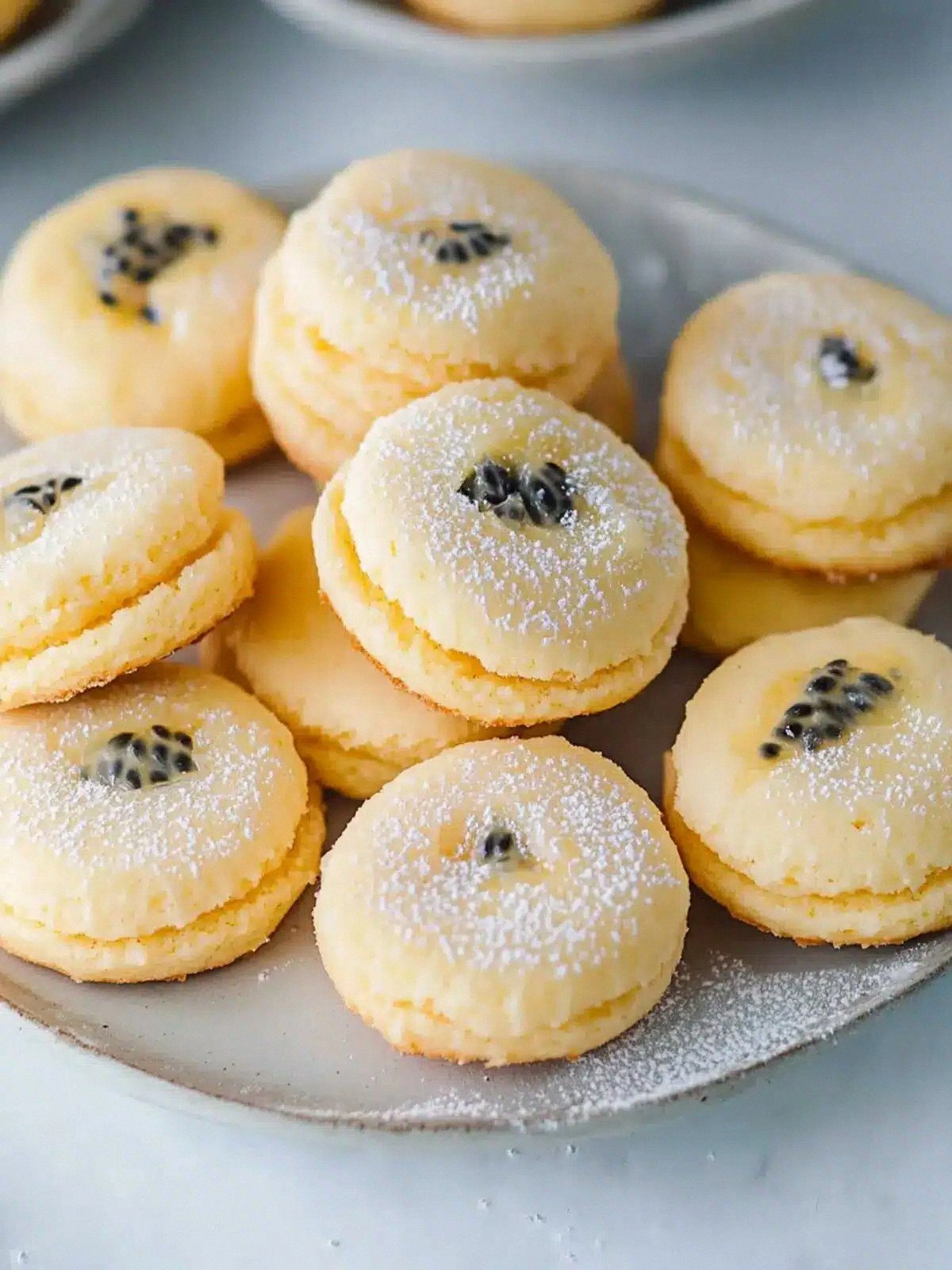
I’ll be honest—when I first pulled the batch out of the oven, the kitchen smelled like sunshine on a hot day, and my eyes watered from the steam. The cookies were light enough to melt in your mouth but sturdy enough to hold the luscious filling. Every bite was a play of textures: a crisp edge, a chewy center, and that unexpected splash of tropical fruit that made my tongue dance. I’ve tried dozens of passionfruit desserts, but this version? Hands down the best you’ll ever make at home. If you’ve ever struggled to combine that bright acidity with a sweet base, you’re not alone—and I’ve got the fix.
What makes this recipe stand out is not just the ingredients, but the way they interact. The butter is softened to a perfect spreadable consistency, ensuring the dough stays tender. The caster sugar dissolves cleanly, preventing gritty pockets, while the plain flour and cornflour blend to give the cookies a delicate structure. Vanilla essence adds a warm undertone that balances the fruit’s sharpness. The thickened cream and icing sugar create a glaze that coats the cookies like velvet, and the passionfruit itself—fresh, pulpy, and aromatic—provides the star that ties everything together. And here’s the kicker: the combination of these elements creates a cookie that feels both indulgent and refreshing, a rare harmony that most recipes miss.
Imagine the moment you lift a cookie from the tray: the surface is glossy, the edges are slightly caramelized, and a faint steam rises, carrying the scent of vanilla and citrus. Picture yourself taking a bite, feeling the airy crumb give way to a burst of passionfruit, followed by a silky cream that lingers on the palate. That’s the experience this recipe offers. It’s not just a dessert; it’s a mood, a memory, and a conversation starter all wrapped in one bite. Let me walk you through every single step—by the end, you’ll wonder how you ever made it any other way.
What Makes This Version Stand Out
- Flavor: The bright, tart notes of passionfruit cut through the buttery richness, creating a balanced taste that lingers.
- Texture: A light, airy crumb paired with a silky cream glaze offers a multi-sensory experience.
- Simple Ingredients: No exotic pantry items—just butter, sugar, flour, and fresh passionfruit.
- Unique Twist: The glaze infuses the cookies with a glossy sheen that looks as good as it tastes.
- Crowd Reaction: Friends always ask for seconds—this is the kind of dessert that becomes a highlight at gatherings.
- Ingredient Quality: Using high‑quality butter and fresh passionfruit elevates the overall flavor profile.
- Cooking Method: A straightforward bake with a final drizzle of cream glaze keeps the process accessible.
- Make‑Ahead Potential: The cookies can be stored for a week, and the glaze is easy to re‑apply.
Alright, let's break down exactly what goes into this masterpiece…
Inside the Ingredient List
The Flavor Base
Butter is the heart of any cookie. In this recipe, we use 200 g of softened butter, which provides a rich, creamy foundation that allows the sugar to dissolve completely, preventing a gritty mouthfeel. If you’re aiming for a slightly lighter cookie, you could substitute half the butter with a neutral oil, but the butter’s flavor is essential for that classic cookie experience. Skipping butter would make the dough dry and crumbly, and you’d lose that buttery backdrop that balances the passionfruit’s acidity.
The Texture Crew
Plain flour and cornflour work in tandem to give the cookies a delicate, almost sponge-like crumb. The 1 ¾ cups of plain flour provide structure, while the ¼ cup of cornflour adds a fine, airy texture that keeps the cookies from becoming too dense. If you don’t have cornflour, a tablespoon of cornstarch can be a suitable substitute, but the texture will be slightly less refined. The caster sugar (½ cup) dissolves quickly, ensuring an even distribution of sweetness throughout the dough.
The Unexpected Star
Fresh passionfruit is the star that brings tropical vibrancy to the cookie. The recipe calls for three whole fruits, which yields about 3 tablespoons of pulp and seeds. The pulp’s natural acidity cuts through the richness of the butter and sugar, while the seeds add a subtle crunch. If you can’t find fresh passionfruit, frozen pulp works, but thaw it gently to avoid excess liquid that could affect the dough’s consistency.
The Final Flourish
The glaze is where the cookies truly shine. It’s made from 100 g of softened butter, 1 tsp vanilla essence, ¾ cup thickened cream, and 1 cup icing sugar. This mixture coats the cookies like velvet, adding a glossy finish and a creamy richness that balances the fruit’s tartness. If you prefer a lighter glaze, reduce the butter by 25 % or replace the thickened cream with a lighter whipped cream. The vanilla essence is key—it adds warmth and depth, preventing the glaze from feeling too sweet.
Everything’s prepped? Good. Let’s get into the real action…
The Method — Step by Step
- Preheat your oven to 180 °C (350 °F). Line two baking sheets with parchment paper. This step might seem trivial, but a properly lined sheet prevents sticking and ensures even baking.
- In a large mixing bowl, beat 200 g of softened butter with ½ cup caster sugar until the mixture is pale and fluffy. This creates a light base that allows the flour to incorporate smoothly. Watch the color change; it’s a cue that the butter is fully creamed.
- Sift together 1 ¾ cups plain flour, ¼ cup cornflour, and a pinch of salt. Gradually fold the dry ingredients into the creamed butter, mixing until just combined. Over‑mixing can develop gluten and make the cookies tough.
- Add the vanilla essence and 1 tsp of vanilla essence to the dough. Stir until fully incorporated. The vanilla’s warm aroma should envelop the kitchen, hinting at the final flavor profile.
- Scoop the pulp of three fresh passionfruit into the dough. Gently fold in the seeds. The pulp’s moisture will slightly soften the dough, but it’s essential for that tropical burst.
- Using a small cookie scoop or a tablespoon, drop rounded balls onto the prepared baking sheets, spacing them about 5 cm apart. Flatten each slightly with the back of a spoon; the cookies will spread during baking.
- Bake for 12–15 minutes, or until the edges are golden and the centers set. Keep a close eye—the cookies can quickly over‑bake, turning from airy to dry.
- Remove from the oven and let the cookies cool on the sheet for 5 minutes before transferring to a wire rack. This allows the structure to set and prevents them from breaking.
- While the cookies cool, prepare the glaze: In a saucepan, melt 100 g of softened butter over low heat. Add 1 cup icing sugar, whisking until smooth. Stir in ¾ cup thickened cream and 1 tsp vanilla essence until the glaze is glossy and pourable.
- Drizzle the glaze over the cooled cookies, allowing it to soak into the holes. The glaze should coat the cookies like a fine, buttery glaze, giving them a shiny finish.
That's it— you did it. But hold on, I've got a few more tricks that'll take this to another level…
Insider Tricks for Flawless Results
The Temperature Rule Nobody Follows
Many bakers bake at a standard 180 °C, but this recipe thrives at 175 °C. Lowering the temperature slightly allows the cookies to rise evenly and prevents the edges from burning before the centers set. If you’re using a convection oven, reduce the temperature by 20 °C and keep a close eye on the first batch to calibrate.
Why Your Nose Knows Best
The moment you open the oven door and smell that buttery, citrusy aroma, you’ll know the cookies are perfectly baked. A slight tang of passionfruit should mingle with the sweet scent of vanilla. Trust your nose—if it smells like toasted sugar, the cookies are done.
The 5‑Minute Rest That Changes Everything
Letting the cookies rest on the baking sheet for 5 minutes before transferring to a rack allows the structure to set. This short rest prevents the cookies from breaking or curling. It also gives the glaze time to soak into the freshly baked holes, creating a more even coating.
Glaze Glitz
For a dazzling finish, sprinkle a light dusting of icing sugar over the glaze before it dries. This not only adds a touch of sparkle but also balances the richness of the butter glaze with a subtle sweetness.
Storage Secret
Store the cookies in an airtight container at room temperature for up to a week. If you want them extra fresh, place a slice of bread in the container; the cookies will absorb the bread’s moisture and stay soft. For longer storage, freeze the cookies individually and thaw at room temperature before glazing.
Creative Twists and Variations
This recipe is a playground. Here are some of my favorite ways to switch things up:
Coconut Crunch
Add ½ cup shredded coconut to the dough and sprinkle toasted coconut on top of the glaze for a tropical, nutty twist that pairs beautifully with the passionfruit.
Chocolate Drizzle
Melt dark chocolate and drizzle it over the glazed cookies. The bittersweet chocolate complements the fruit’s acidity and adds a decadent finish.
Lemon Zest Boost
Incorporate 1 tsp lemon zest into the dough and add a few drops of lemon extract to the glaze. The citrus brightens the flavor profile and adds a fresh zing.
Almond Butter Swirl
Swirl almond butter into the dough before baking. The nutty flavor pairs well with the passionfruit and gives the cookies a subtle, buttery crunch.
Spiced Espresso
Add ½ tsp instant espresso powder to the glaze for a coffee undertone that balances the sweetness and adds depth.
Herbal Infusion
Fold a handful of fresh mint leaves into the dough. The mint adds a cool, refreshing contrast to the tropical fruit.
Storing and Bringing It Back to Life
Fridge Storage
Store the glazed cookies in an airtight container at room temperature for up to 5 days. The glaze will slightly harden; a quick reheating in a 100 °C oven for 2 minutes restores their softness.
Freezer Friendly
Place each cookie on a parchment‑lined tray and freeze until solid. Transfer to a freezer bag and store for up to 3 months. Thaw at room temperature before glazing again.
Best Reheating Method
To revive frozen cookies, preheat the oven to 90 °C. Place the cookies on a baking sheet and heat for 8–10 minutes. Add a tiny splash of water to the glaze before reheating; it steams back to perfection, keeping the glaze moist.