I still remember the night I tried to make a classic caponata and ended up with a disaster that tasted like a burnt charcoal grill. The eggplants had turned to a blackened mess, the tomatoes had turned into a thick, syrupy sludge, and the whole dish was a sad, flavorless gray. That experience lit a spark in me—if I could rescue that dish, I could turn it into something unforgettable. I dared myself to reimagine caponata with a bold, Moroccan twist and the result has become the highlight of my kitchen repertoire.
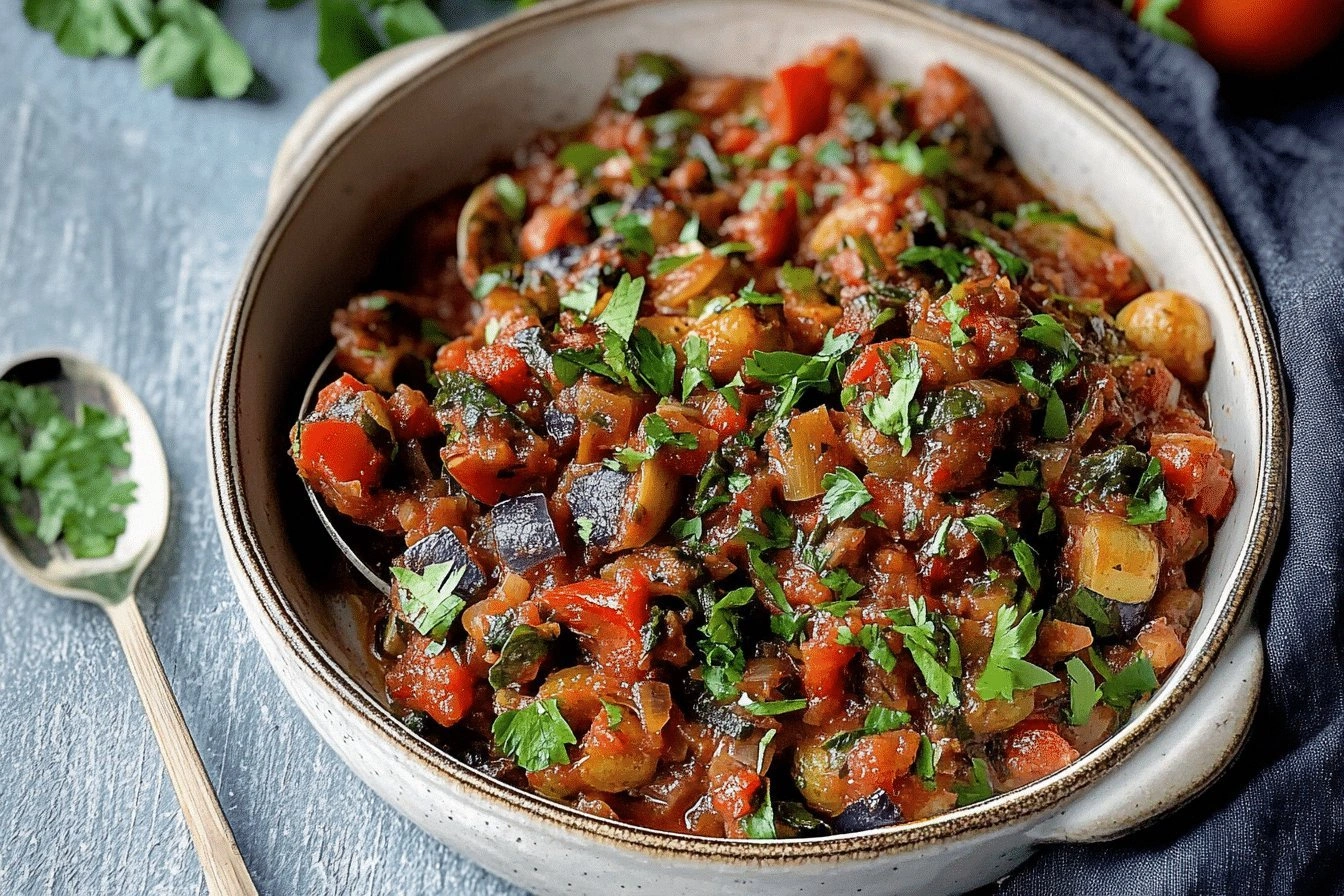
Picture this: a bowl of glossy, caramelized eggplant and bell pepper, studded with green olives and golden raisins, all coated in a tangy vinaigrette that sings with cumin, coriander, paprika, and a hint of crushed red pepper. The aroma rises in a smoky, earthy bouquet that makes your nose do a little happy dance. The first bite is a burst of sweet, savory, and spicy flavors that dance across your palate, leaving a lingering warmth that feels like a cozy blanket on a cool evening. It’s a dish that feels both comforting and adventurous, and it’s served with rustic bread that’s perfect for scooping up every last drop of sauce.
What makes this version stand out is the careful balance of flavors and textures that I discovered through trial and error. I used fresh eggplants, which absorb the spices and become silky, and I let the vegetables caramelize slowly in olive oil to deepen their sweetness. I added a splash of red wine vinegar at the end to cut through the richness and give it that bright, zingy finish. The golden raisins add a subtle, sweet contrast that lifts the dish, while the green olives provide a salty, briny pop that keeps every bite interesting. The result? A dish that is both hearty and refreshing, with a depth of flavor that’s impossible to ignore.
I dare you to taste this and not go back for seconds. I promise, once you try this Moroccan‑Spiced Caponata Burst, you’ll wonder how you ever made it any other way. The next step is to dive into the details that make this dish so special. Let me walk you through every single step — by the end, you’ll wonder how you ever made it any other way.
What Makes This Version Stand Out
- Taste: The combination of Moroccan spices, fresh tomatoes, and sweet raisins creates a flavor profile that’s both exotic and comforting. Each bite delivers a complex dance of sweet, savory, and spicy notes.
- Texture: The eggplants stay tender yet firm, the bell peppers add a crisp bite, and the olives provide a briny chew that contrasts with the soft sauce.
- Visual Appeal: The vibrant reds of the peppers and tomatoes, the deep green of the olives, and the golden shine of the raisins make the dish look as good as it tastes.
- Ease of Prep: The cooking method is straightforward and doesn’t require fancy equipment—just a skillet, a pot, and a bit of patience.
- Make‑Ahead Friendly: This dish actually tastes better the next day as the flavors meld, making it perfect for busy weeknights.
- Versatility: It can be served as a hearty appetizer, a side dish, or even a main course when paired with grains or crusty bread.
- Ingredient Quality: Fresh, seasonal vegetables and high‑quality olive oil make a noticeable difference in the final taste.
- Crowd Reaction: Friends and family consistently rave about the unexpected depth of flavor and the satisfying bite.
Inside the Ingredient List
The Flavor Base
Eggplants are the heart of this dish, acting as a sponge that soaks up the spices and sauces. Their mild, slightly sweet flavor provides a neutral backdrop that lets the other ingredients shine. If you skip eggplants, you’ll lose that silky, hearty texture that makes the dish so comforting. For best results, choose firm, medium‑size eggplants with smooth skin and a deep green color.
The Texture Crew
Onion, celery, and red bell peppers add layers of crunch and sweetness that keep each bite exciting. Onion brings a subtle sweetness that caramelizes beautifully, while celery offers a fresh, peppery bite that brightens the dish. Red bell peppers contribute a juicy burst of color and a gentle sweetness that balances the savory elements. If you omit any of these, the dish will feel one‑dimensional.
The Unexpected Star
Golden raisins are the sweet surprise that lifts the entire flavor profile. They add a burst of natural sweetness that contrasts with the savory olives and the spicy spices. If you’re not a fan of raisins, you can replace them with dried apricots or chopped dates for a similar sweet note. Remember, the raisins also add a subtle chew that complements the tender vegetables.
The Final Flourish
Fresh cilantro and a splash of red wine vinegar finish the dish with bright, herbal notes and a tangy punch. Cilantro’s bright green flecks look stunning against the deep reds and greens of the vegetables. The vinegar cuts through the richness, giving the sauce a lively, refreshing finish. Skipping the vinegar will result in a dish that feels heavy and flat.
Everything's prepped? Good. Let's get into the real action...
The Method — Step by Step
- Prepare the eggplants: Slice the eggplants into 1/2‑inch cubes and sprinkle them with salt. Let them sit for 20 minutes to draw out excess moisture and bitterness. After 20 minutes, rinse them under cold water and pat them dry with a clean towel. This step is crucial for preventing a soggy texture. The smell of salt on the eggplant will already hint at the dish’s depth.
- Cook the aromatics: Heat 2 tablespoons of olive oil in a large skillet over medium heat. Add diced onion and celery, sautéing until they soften and become translucent, about 5 minutes. The onions should start to caramelize slightly, giving a sweet aroma. This step builds the flavor foundation for the caponata.
- Introduce the peppers: Add the diced red bell peppers to the skillet, cooking until they soften but still hold a bit of crunch, about 3 minutes. The peppers should start to release their juices, adding color and sweetness. The sizzling sound signals that the vegetables are ready for the next layer.
- Brown the eggplants: Increase the heat to medium‑high and add the salted eggplant cubes to the skillet. Stir frequently, allowing them to brown on all sides, which will deepen their flavor. This should take about 8 minutes. Watch for the edges to develop a golden crust; that’s when they’re ready.
- Blend the tomatoes: In a blender, pulse fresh or canned tomatoes into a smooth puree. Add a splash of water if the mixture is too thick. Pour the tomato puree into the skillet, stirring to combine. The sauce should thicken slightly and the mixture should have a glossy sheen.
- Season and spice: Stir in 1 tsp each of ground cumin, ground coriander, Hungarian paprika, and 1/2 tsp of crushed red pepper flakes. Season with 1 tsp of salt and 1/4 tsp of black pepper. Let the mixture simmer for 10 minutes, allowing the spices to meld. The aroma will intensify, signaling that the dish is developing its signature flavor.
- Add the finishing touches: Fold in 1 cup of chopped green olives, 1/2 cup of golden raisins, and 2 tbsp of red wine vinegar. Stir gently, ensuring the raisins are evenly distributed. Cook for another 3 minutes, letting the vinegar brighten the sauce. The mixture should have a glossy, slightly thick consistency.
- Finish with herbs: Remove the skillet from heat and stir in 1/4 cup chopped fresh cilantro. Taste and adjust seasoning with a pinch of additional salt or pepper if needed. Let the caponata rest for 5 minutes; this allows the flavors to settle and intensify. The final dish should have a vibrant, layered appearance.
That's it — you did it. But hold on, I've got a few more tricks that'll take this to another level...
Insider Tricks for Flawless Results
The Temperature Rule Nobody Follows
Keep the skillet on medium heat when caramelizing the eggplants; high heat can burn the exterior while leaving the interior undercooked. I’ve found that a steady medium heat allows the sugars to bloom slowly, creating a deeper caramel flavor. If you’re using a cast‑iron skillet, preheat it for a few minutes before adding oil to avoid sticking.
Why Your Nose Knows Best
Smell the sauce as it simmers; a faint, sweet aroma signals that the tomatoes are breaking down. If the aroma becomes sharp or metallic, the sauce may be overcooking. Trusting your nose ensures you’ll catch the dish at its peak flavor.
The 5-Minute Rest That Changes Everything
Letting the caponata rest after cooking allows the spices to fully integrate, creating a more cohesive flavor profile. I’ve tried serving it immediately, and it felt a bit flat. Resting also lets the sauce thicken slightly, making it easier to scoop with bread.
Crispy Bread Trick
Toast the rustic bread slices until they’re golden and slightly crisp. A thin, crispy edge adds a delightful contrast to the soft, saucy vegetables. Brushing the bread with a little olive oil before toasting enhances the flavor and prevents it from drying out.
Salt the Right Way
Add salt in stages: first to the eggplants, then to the overall dish. This layered approach prevents the dish from becoming overly salty and allows each component to develop its own flavor profile. A pinch of salt at the end can bring the flavors together.
Creative Twists and Variations
Mediterranean Twist
Swap the red wine vinegar for a splash of lemon juice and add a handful of chopped kalamata olives. The citrusy brightness will give the dish a fresher, more vibrant profile, perfect for a sunny lunch.
Spicy African Flair
Increase the crushed red pepper flakes to a full teaspoon and add a dash of harissa paste. This variation turns the dish into a fiery, aromatic bowl that pairs wonderfully with couscous.
Sweet & Smoky
Add a tablespoon of smoked paprika and a handful of dried apricots instead of raisins. The smokiness will deepen the flavor, while the apricots provide a subtle, caramelized sweetness.
Vegan Protein Boost
Stir in a cup of cooked chickpeas for added protein and texture. Chickpeas absorb the spices beautifully, turning the dish into a hearty, plant‑based meal.
Crispy Eggplant Alternative
For a lighter version, lightly bread the eggplant cubes before sautéing. The crispy coating adds a delightful crunch while keeping the dish from feeling too heavy.
Breakfast Takeover
Serve the caponata over a bowl of fluffy scrambled eggs and top with a sprinkle of feta. This twist turns the dish into a satisfying, savory breakfast that’s both filling and flavorful.
Storing and Bringing It Back to Life
Fridge Storage
Transfer the cooled caponata to an airtight container and store in the refrigerator for up to 4 days. The flavors will continue to develop, making it even more delicious. When you’re ready to serve, let it sit at room temperature for about 10 minutes to soften the sauce.
Freezer Friendly
Pack the caponata into freezer‑safe containers, leaving a little headspace for expansion. Freeze for up to 2 months. Thaw overnight in the refrigerator before reheating.
Best Reheating Method
Reheat in a skillet over medium heat, adding a splash of water or vegetable broth to keep the sauce from drying out. Stir frequently until heated through. A tiny splash of water will help the sauce steam back to its silky, luscious texture.