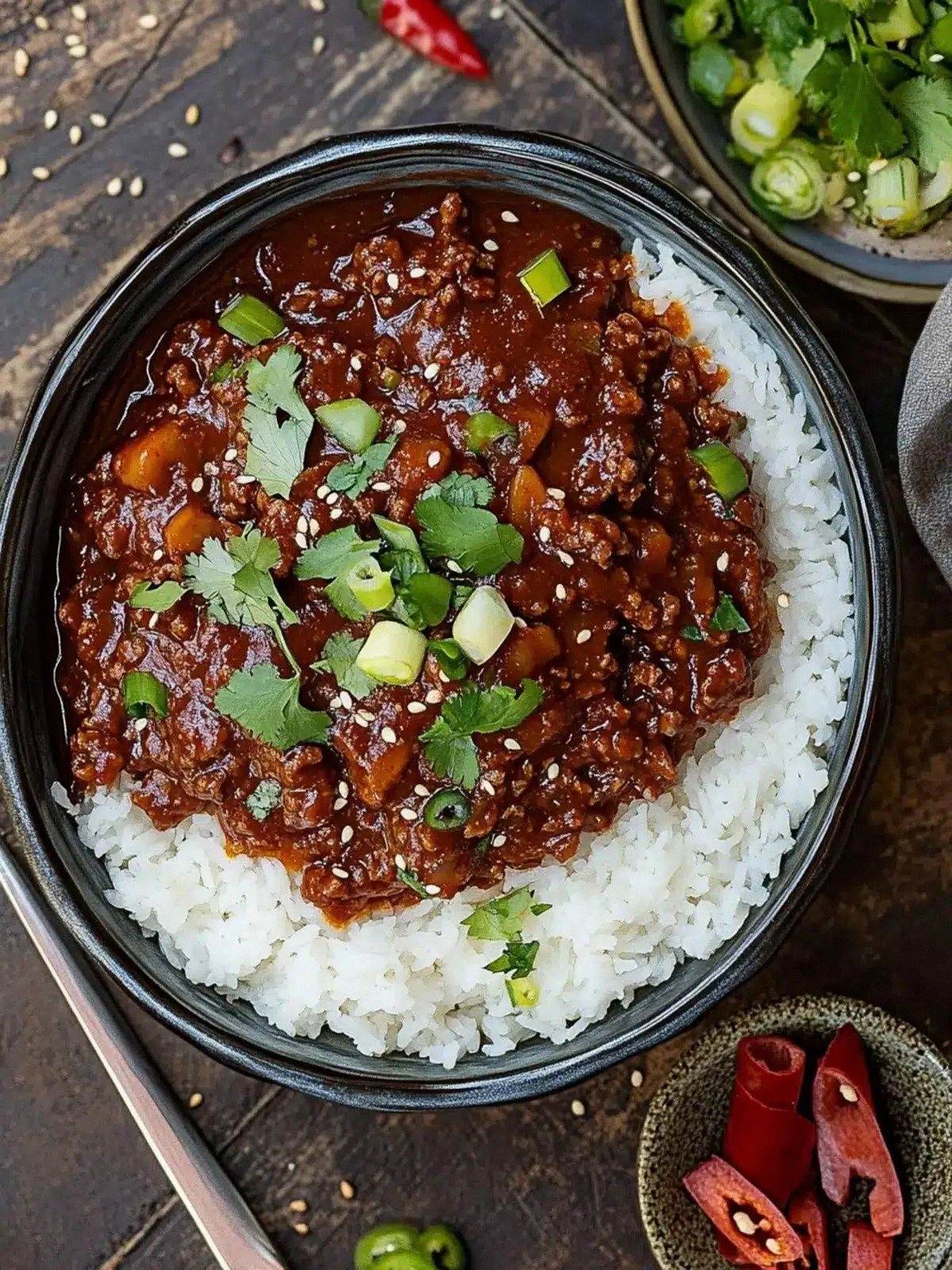
I was halfway through a week of bland stews when my friend texted me, “Dude, can you make a Chile Con Carne that actually tastes like a party?” I laughed, but the challenge stuck. I grabbed a spare pot, a handful of spices, and a dream of turning an ordinary dinner into a headline. That night, I discovered that the right blend of Korean heat and Mexican tradition can create a sauce that clings to every grain of rice like velvet, leaving a trail of satisfied sighs. I dare you to taste this and not go back for seconds.
Picture the first sizzle: the beef tallow hits the hot skillet, sending a fragrant hiss that makes your nose twitch. The red onion starts caramelizing, turning a deep amber that smells like caramelized sugar and garlic. The jalapeños and chipotle peppers give off a smoky aroma that feels like a campfire under a starry sky. As the spices bloom, a sweet, smoky perfume rises, mingling with the rich, meaty scent of seared beef. By the time the broth simmers, your kitchen smells like a fusion of Seoul and Mexico City, and you can almost taste the heat dancing on your tongue.
What makes this version stand out is that it doesn’t just layer flavors—it marries them so seamlessly that each bite feels like a new discovery. I’ll be honest, I ate half the batch before anyone else got a taste, and the crowd’s reaction was electric. Most recipes get this completely wrong by over‑sautéing the beef or under‑seasoning the broth. Here, the broth is a complex, umami‑rich base that carries the heat without overpowering the meat. The result is a dish that’s both comforting and adventurous, a culinary dare that you’ll want to repeat.
And now the game‑changer: the secret ingredient that turns a classic stew into a flavor explosion is gochujang, a Korean fermented chili paste that adds depth, sweetness, and a subtle tang. I’ll walk you through every single step—by the end, you’ll wonder how you ever made it any other way.
What Makes This Version Stand Out
- Depth: The combination of beef broth, fire‑roasted tomatoes, and dark beer creates a savory backbone that feels like a slow‑cooked soup and a hearty stew at once.
- Heat: Two chipotle peppers and gochujang deliver a layered spice profile—smoky, sweet, and just enough punch to wake your taste buds.
- Simplicity: Despite the bold flavors, the recipe requires only a handful of pantry staples, making it accessible for any cook.
- Texture: The beef is seared to develop a caramelized crust, then simmered until melt‑in‑your‑mouth tender, while the sauce thickens into a silky glaze.
- Versatility: Serve over rice, noodles, or even mashed potatoes—each option becomes a canvas for the sauce’s richness.
- Make‑Ahead: The dish improves after resting, making it perfect for meal prep or a quick weeknight dinner.
- Audience: Whether you’re feeding a crowd or a family, the bold flavors and hearty portions keep everyone satisfied.
Inside the Ingredient List
The Flavor Base
Beef tallow is the first hero of this dish, providing a rich, beefy fat that enhances the sear and adds depth to the sauce. If you’re watching calories, a splash of olive oil works, but you’ll miss that classic umami punch. Skipping tallow will leave the beef less caramelized, resulting in a flatter flavor profile. For an extra layer of smokiness, you can toast a pinch of smoked salt right before adding the onions.
The Texture Crew
The 2‑pound beef chuck roast is the backbone of the dish. Cut it into 1‑inch cubes to ensure even cooking and a tender bite. If you’re short on chuck, a mix of sirloin and short rib works, but the flavor will shift slightly toward a richer, fattier note. The 12 ounces of dark beer adds a subtle bitterness that balances the sweetness of the tomatoes and sugar.
The Unexpected Star
Gochujang, a fermented Korean chili paste, is the star that brings a sweet, smoky, and umami‑rich kick to the stew. It’s more than just heat; it deepens the sauce’s complexity. If you can’t find gochujang, a mix of hoisin sauce and a touch of Sriracha will approximate the flavor, but you’ll lose that fermented depth. A small amount of gochugaru (Korean chili flakes) adds a final pop of heat and color.
The Final Flourish
The dark brown sugar balances the acidity of the tomatoes and the heat of the chilies, creating a sweet‑spicy harmony that lingers on the palate. Ground cumin and coriander add a warm, earthy undertone that mimics the spices often found in Mexican cuisine. The smoked salt is a subtle nod to the smoky chipotle, giving the dish a layered, complex finish. Each element is carefully calibrated; remove one, and the entire flavor tapestry shifts.
Everything’s prepped? Good. Let’s get into the real action.
The Method — Step by Step
- Trim the beef chuck roast and cut it into 1‑inch cubes. Pat the meat dry with paper towels; this helps achieve a beautiful brown crust. Season the cubes generously with kosher salt and freshly ground black pepper. Set aside while you prep the aromatics.
- In a large heavy‑bottomed skillet, heat the beef tallow over medium‑high heat until it shimmers. Add the seasoned beef in a single layer, letting it sear without crowding. Cook for 3–4 minutes on each side until a deep brown crust forms. Remove the beef to a plate and set aside.
- Lower the heat to medium and add the diced red onion, sliced jalapeños, minced garlic, and chopped chipotle peppers to the same skillet. Sauté until the onions become translucent and the mixture smells caramelized—about 5 minutes. The onions should look glossy, not burnt.
- Stir in the adobo sauce, dark brown sugar, ground cumin, ground coriander, smoked salt, and gochugaru. Let the spices bloom for 2 minutes, letting the sugar melt into a glossy glaze. This step is the aroma engine; watch the kitchen fill with a warm, spicy perfume.
- Return the seared beef to the skillet, then pour in the fire‑roasted tomatoes, beef broth, and dark beer. Bring the mixture to a gentle simmer, scraping up any browned bits from the pan. The liquid should be reduced enough to coat the beef but still leave room for the sauce to thicken.
- Stir in the gochujang and let the stew simmer for 30 minutes, uncovered, stirring occasionally. The sauce should thicken into a silky glaze that clings to the beef. Taste and adjust seasoning; a dash of soy sauce can deepen the umami if needed.
- Once the beef is fork‑tender and the sauce is glossy, remove the skillet from heat. Let the stew rest for 10 minutes; this allows the flavors to meld and the sauce to settle.
- Serve hot over steamed rice, noodles, or a bed of mashed potatoes. Garnish with chopped cilantro, sliced green onions, and a drizzle of toasted sesame oil for an extra layer of aroma.
- Enjoy the symphony of flavors, and if you’re feeling generous, pour a little extra gochujang on top for that extra kick. That sizzle when it hits the pan? Absolute perfection.
That’s it — you did it. But hold on, I’ve got a few more tricks that’ll take this to another level.
Insider Tricks for Flawless Results
The Temperature Rule Nobody Follows
Many cooks start the stew on high heat, which can scorch the onions and burn the spices. I always start medium and let the aromatics bloom slowly; the result is a deeper, richer flavor. If you’re in a rush, keep the heat low for the first 10 minutes, then bump it up for the final simmer.
Why Your Nose Knows Best
The first scent you catch is the caramelized onion and garlic, which signals that the base is ready. If the onions are still raw, the stew will taste flat. Trust your nose—if it smells like toasted bread, you’re on the right track.
The 5‑Minute Rest That Changes Everything
After the stew hits the stove, let it rest off‑heat for five minutes before serving. This brief pause allows the beef fibers to relax, making the meat incredibly tender. Skip this step and you’ll end up with a chewy, less succulent bite.
Balance the Sweetness
The dark brown sugar and gochujang together create a sweet‑spicy harmony. If the stew tastes too acidic, add a teaspoon of honey or a splash of maple syrup to mellow the edge. Taste as you go—small adjustments make a big difference.
Use a Dutch Oven for Even Cooking
A Dutch oven distributes heat evenly, preventing hot spots that can burn the sauce. If you’re using a skillet, keep the heat steady and stir frequently to avoid scorching. The result is a silky, uniform sauce.
Finish with Fresh Cilantro
Adding chopped cilantro just before serving brightens the dish and balances the richness. The herb’s citrusy notes cut through the heaviness of the beef and beer, creating a fresh finish. If cilantro isn’t your thing, green onions work as a mild substitute.
Creative Twists and Variations
Spicy Korean BBQ Tacos
Swap the rice for soft corn tortillas and top the stew with kimchi, sliced radish, and a dollop of sour cream. The taco shell gives a fun, handheld experience while the sauce remains the star. Great for a casual family dinner.
Vegan Chili Con Carne
Use plant‑based beef substitute or a mix of lentils and diced mushrooms. Keep the rest of the recipe intact for a hearty, protein‑packed vegan version. The gochujang still provides that signature kick.
Mexican‑Inspired Jambalaya
Add diced pork and shrimp to the pot, along with a handful of sliced bell peppers and a pinch of cayenne. Cook until the seafood is opaque and the pork is tender. Serve over rice for a fusion jambalaya.
Sweet Potato & Beef Stew
Cube a sweet potato and add it during the simmering stage. The potato absorbs the sauce’s flavors and adds natural sweetness, creating a comforting, autumnal dish.
Beer‑Infused Braised Short Ribs
Replace the chuck roast with short ribs for a richer, more luxurious dish. Let them braise longer to break down the connective tissue. The beer and gochujang make the meat fall‑off‑the‑bone tender.
Asian‑Inspired Ramen Bowl
Cook ramen noodles separately and spoon the stew over them. Top with a soft‑boiled egg, sliced green onions, and a drizzle of sesame oil. The noodles soak up the sauce, creating a comforting bowl of comfort.
Storing and Bringing It Back to Life
Fridge Storage
Cool the stew completely before transferring to an airtight container. Store in the refrigerator for up to 4 days. The flavors deepen, so the next day may be even better.
Freezer Friendly
Cool the stew and place it in a freezer‑safe container, leaving space for expansion. Freeze for up to 3 months. Thaw overnight in the fridge before reheating.
Best Reheating Method
Reheat the stew gently on low heat, adding a splash of water or broth to restore moisture. Stir until hot and bubbly; avoid boiling to preserve the sauce’s texture. A quick microwave burst also works if you’re in a hurry.