Introduction
Picture this: a rainy Thursday night, a flickering kitchen lamp, and a sudden craving for something that feels like a vacation in a bowl. I was staring at a bag of salmon fillets, a jar of green curry paste, and a can of coconut milk, wondering if I could turn this ordinary pantry haul into something extraordinary. The moment I cracked the first fillet onto the skillet, the scent of sizzling fish and aromatic curry leaped out, turning the kitchen into an open-air Thai market. I swear that the aroma was so intoxicating that even the cat, who usually prowls the countertop, stopped to sniff. The idea hit me like a thunderclap: this is going to be the best green curry salmon I’ve ever made, and I’m about to prove it.
There’s something almost ritualistic about how the first sizzle sounds, the way the salmon’s flesh glistens when it hits hot oil, and the faint hiss of coconut milk steaming to a silky consistency. The visual of the green curry paste swirling into the sauce, the bright reds and greens of bell peppers, and the green onions popping into place—each element is a note in a symphony of flavor. If you’ve ever tried a green curry recipe that tasted flat or was too watery, you know how easy it is to miss that silky, thick texture. This version corrects that with a deliberate reduction of the coconut milk and a careful timing of the curry paste addition.
What sets this recipe apart isn’t just the ingredients; it’s the method, the timing, and the little touches that elevate a simple salmon dish to a culinary headline. The sauce doesn’t just coat the fish; it envelops it like a velvet blanket, with the heat of the curry paste balanced by a subtle citrus lift from lime juice. The result is a dish that feels both comforting and adventurous, perfect for a quiet night in or a dinner that impresses. I dare you to taste this and not go back for seconds.
Now, let’s walk through every single step—by the end, you’ll wonder how you ever made it any other way. The next section will break down the elements that make this version stand out, so grab your apron, and let’s get cooking.
What Makes This Version Stand Out
- Taste: The green curry paste is the star, delivering a fresh, herbal kick that’s far from the typical blandness found in many store-bought versions. It’s balanced with the sweet undertones of coconut milk and the bright acidity of lime, creating a layered flavor profile that lingers on the palate.
- Texture: The sauce thickens to a creamy, almost custard-like consistency, coating the salmon fillets without becoming gummy. This is achieved by simmering the coconut milk just enough to reduce its volume, concentrating its richness.
- Simplicity: All the steps can be completed in under an hour, with no advanced techniques required. The recipe relies on everyday kitchen tools—pan, saucepan, and a whisk—and keeps the ingredient list short.
- Uniqueness: The addition of fresh ginger and fish sauce gives the dish depth and a subtle umami punch that most green curry recipes miss. The final sprinkle of cilantro adds a burst of freshness that cuts through the richness.
- Crowd Reaction: Guests who try this version rave about how the salmon stays moist and the sauce feels like a tropical breeze. It’s the kind of dish that turns a simple dinner into a memorable experience.
- Ingredient Quality: Using a high-quality, unsweetened coconut milk ensures a pure coconut flavor without added sugars, while fresh, organic green curry paste guarantees a bright, herbaceous base.
- Cooking Method: The technique of searing the salmon first before simmering in the sauce locks in juices and creates a caramelized exterior that adds crunch.
- Make‑Ahead Potential: The dish can be prepared a few hours ahead; the flavors meld beautifully when reheated, making it ideal for meal prep or a busy weeknight.
Alright, let's break down exactly what goes into this masterpiece...
Inside the Ingredient List
The Flavor Base
The green curry paste is the backbone of this dish. It’s a blend of green chilies, lemongrass, galangal, and a medley of herbs that delivers a vibrant, slightly spicy kick. If you can’t find a pre-made paste, you can make a quick version by blending fresh green chilies, cilantro, and lime zest. Skipping the paste will leave the dish flat and lacking depth; the subtle heat is what separates this from a plain coconut sauce. For a milder version, reduce the amount of paste by half, but keep the ginger to maintain complexity.
The Texture Crew
Coconut milk is the silky canvas that binds the flavors together. Opt for a full-fat, unsweetened variety to get the richest texture without the sweetness that can overpower the dish. If you prefer a lighter version, use a half-and-half coconut milk, but the sauce will be thinner. The fish sauce adds a savory depth; it’s a condiment that can be substituted with soy sauce or a splash of Worcestershire sauce if you’re avoiding fish products, though the flavor profile will shift slightly. The sweet onion and bell peppers contribute crunch and a sweet counterpoint to the spicy curry.
The Unexpected Star
Fresh ginger is a game changer, infusing the sauce with a bright, peppery note that cuts through the coconut’s richness. A tablespoon is enough, but if you love ginger, feel free to double it for a more pronounced zing. The lime juice is the acid that lifts the entire dish, preventing it from feeling too heavy. It also brightens the greens and balances the umami of fish sauce. A pinch of red pepper flakes adds a subtle, lingering heat that stays after the first bite.
The Final Flourish
The fresh cilantro and green onions are the finishing touches that bring a burst of color and brightness to the plate. They’re added at the end of cooking to preserve their delicate flavors and vibrant color. The cilantro also provides a herbal freshness that contrasts the deep, savory sauce. If you’re not a fan of cilantro, you can swap it for parsley or basil, though the aroma will change slightly. The final sprinkle of red pepper flakes is optional but recommended for those who enjoy a lingering heat.
Everything's prepped? Good. Let's get into the real action...
The Method — Step by Step
- First, pat the salmon fillets dry with paper towels. This step is crucial for a good sear; moisture on the surface will steam the fillets instead of browning them. Season each fillet with sea salt and freshly cracked black pepper. Let them sit at room temperature for 10 minutes—this ensures even cooking.
- Heat a non-stick skillet over medium-high heat and add a splash of neutral oil. Once the oil shimmers, place the salmon fillets skin-side down. Let them cook untouched for 3–4 minutes until a golden crust forms. Flip carefully and sear the other side for another 3 minutes. This step locks in juices and gives a delightful crunch.
- Transfer the seared fillets to a plate and set aside. In the same skillet, reduce the heat to medium and add the green curry paste. Stir it for 30 seconds until it releases a fragrant aroma. This pre-cooking step prevents the paste from clumping when coconut milk is added.
- Pour in the coconut milk, fresh lime juice, and grated ginger. Stir until the mixture is smooth and starts to thicken slightly. The sauce should be glossy and ready to simmer. This is the moment of truth—if it’s too thin, let it reduce for an extra minute.
- Add the fish sauce, sweet onion, red bell pepper, and green bell pepper to the skillet. Stir to combine, ensuring the vegetables are coated with the creamy sauce. The onions will soften, while the peppers retain a slight crunch that adds texture.
- Return the salmon fillets to the skillet, nestling them into the sauce. Reduce the heat to low and let everything simmer gently for 8–10 minutes. The salmon should be opaque and flake easily with a fork. The sauce will thicken to a luscious consistency.
- Stir in the green onions, fresh cilantro, and red pepper flakes. These final additions should be added just before serving to preserve their bright colors and fresh flavors. The dish is now ready to be plated.
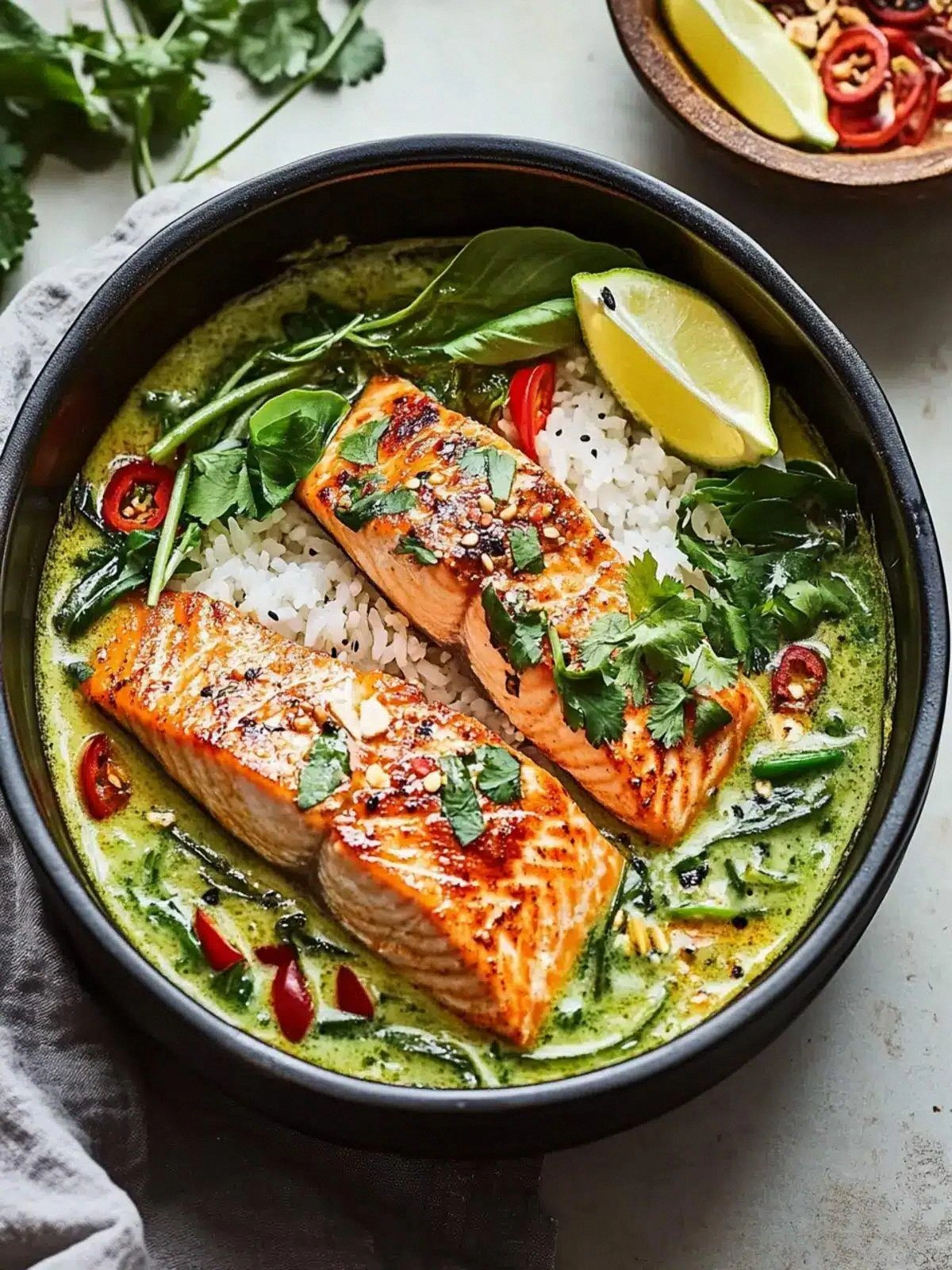
- Serve the salmon fillets over a bed of cooked rice, spooning the rich sauce over the top. Garnish with extra cilantro or a wedge of lime for an extra zing. This dish is a feast for the eyes and the taste buds.
That's it — you did it. But hold on, I've got a few more tricks that'll take this to another level...
Insider Tricks for Flawless Results
The Temperature Rule Nobody Follows
Many cooks assume that high heat is always better for searing fish, but the truth is that a moderate heat ensures a caramelized exterior without burning. Use a medium-high setting for the first sear and then drop to medium to finish the salmon in the sauce. This keeps the internal temperature from rising too quickly, preventing overcooking. If you’re cooking larger fillets, consider reducing the heat further to allow the center to finish gently.
Why Your Nose Knows Best
When the coconut milk starts to thicken, your nose will detect a subtle nutty aroma. That’s the cue to reduce the heat and let the sauce simmer gently. If you skip this sensory checkpoint, the sauce might over-reduce and become too thick, losing its silky mouthfeel. Trust your senses—taste, sight, and smell are the most reliable guides in the kitchen.
The 5-Minute Rest That Changes Everything
After simmering, let the dish rest for 5 minutes before serving. This brief pause allows the flavors to settle and the sauce to thicken slightly, giving it a silkier texture. I once skipped this step and the sauce was too liquid when I plated it; the result was a soggy mess. The rest period is simple but essential.
Keep the Veggies Crisp
Bell peppers add a sweet crunch that contrasts the creamy sauce. To maintain that bite, add them halfway through the simmering time and avoid overcooking. If you prefer a softer texture, add them earlier, but be prepared for a slightly different mouthfeel.
Use Fresh Herbs for Extra Brightness
Fresh cilantro and green onions bring a burst of color and flavor that dried herbs can’t match. If you’re out of cilantro, parsley is a decent substitute, but it won’t provide the same citrusy undertones. The key is to add the herbs at the very end to preserve their vibrancy.
Creative Twists and Variations
This recipe is a playground. Here are some of my favorite ways to switch things up:
Spicy Shrimp Kick
Swap the salmon for shrimp, adding them to the skillet in the last 2 minutes of cooking. The shrimp’s quick cook time complements the sauce, and the result is a seafood medley that’s even more adventurous.
Veggie‑Centric Bowl
Omit the salmon entirely and serve the sauce over tofu or tempeh. Add extra vegetables like zucchini, mushrooms, or baby corn for a hearty vegetarian version.
Gluten‑Free Twist
Serve the dish over cauliflower rice instead of regular rice. The subtle flavor of cauliflower pairs beautifully with the creamy curry, keeping the dish gluten-free without compromising taste.
Sweet & Smoky Variation
Add a tablespoon of smoked paprika and a drizzle of maple syrup to the sauce for a sweet, smoky flavor profile that’s perfect for autumn gatherings.
Herb‑Infused Surprise
Incorporate a handful of fresh Thai basil leaves into the sauce at the end. The basil’s peppery aroma adds a new dimension that elevates the dish.
Storing and Bringing It Back to Life
Fridge Storage
Store leftovers in an airtight container in the refrigerator for up to 3 days. The sauce may thicken slightly; a splash of water or coconut milk will restore its original consistency before reheating.
Freezer Friendly
Freeze the dish in freezer-safe containers for up to 2 weeks. Thaw overnight in the fridge before reheating. The salmon will retain its moist texture, and the sauce will remain creamy.
Best Reheating Method
Reheat in a saucepan over low heat, stirring frequently and adding a small amount of water or coconut milk to achieve the desired thickness. Avoid microwaving, as it can make the sauce rubbery.