I was halfway through a chaotic Sunday dinner when the pot of rice boiled over, splattering my stove like a miniature fireworks display. My friends laughed, but I was mortified, and the kitchen smelled of burnt grains. That night, I vowed to find a dish that could turn a kitchen mishap into a triumph—one that was quick, forgiving, and absolutely delicious. The result? A tofu bowl with peanut sauce that turned my disaster into a culinary masterpiece.
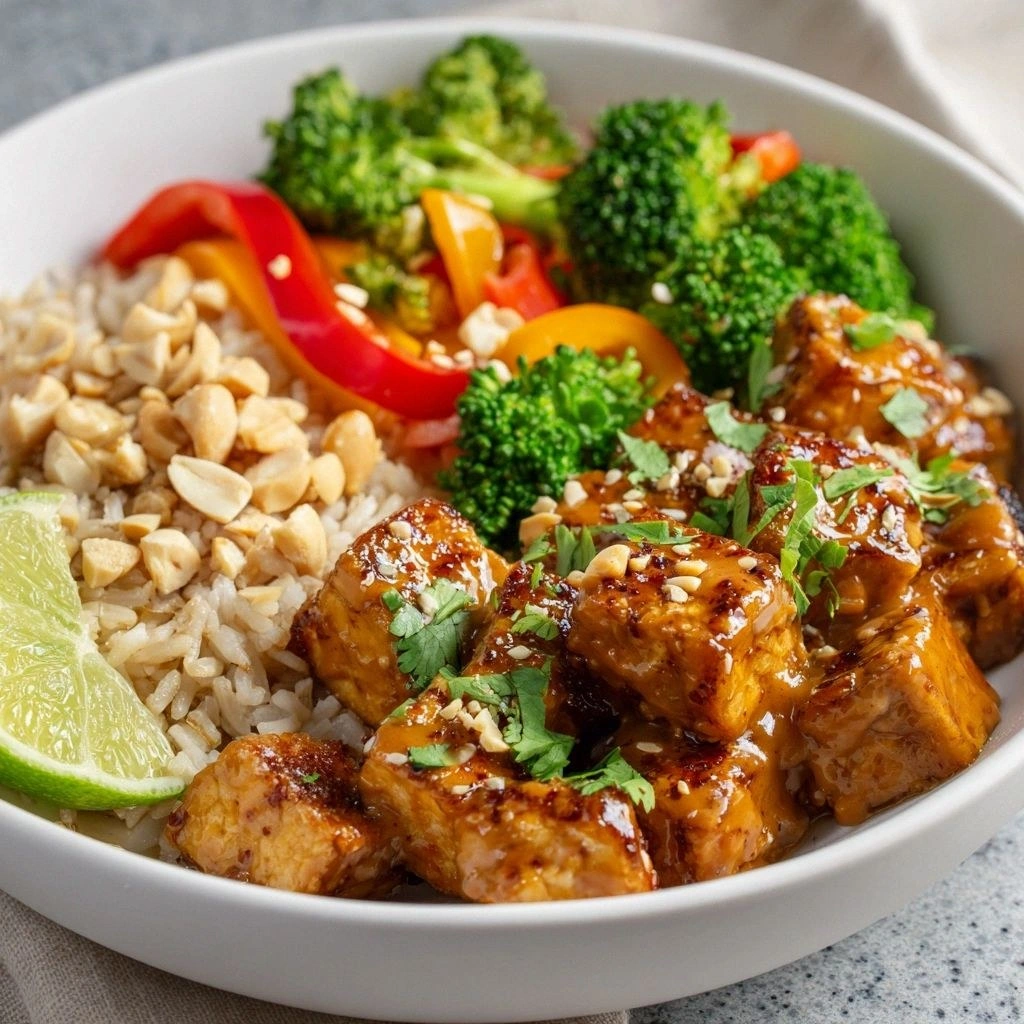
Picture this: the sizzling sound of tofu hitting a hot pan, the aroma of toasted sesame oil mingling with the sweet tang of lime, and the sight of bright, crisp vegetables dancing in a glossy sauce. The first bite delivers a contrast of textures—crisp edges that crackle like thin ice, a creamy peanut coating that glides over the tofu like velvet, and a hearty base of nutty brown rice that feels like a warm hug. The flavors are a perfect balance of salty, sweet, and zesty, each element enhancing the next in a symphony of taste. I dare you to taste this and not go back for seconds; the moment you finish, you’ll be craving the next bite.
What sets this version apart from every other tofu bowl you’ve tried is the meticulous layering of textures and the subtle, unexpected twist of honey that adds a silky sweetness to the peanut sauce. The tofu is pressed to remove excess moisture, ensuring it browns beautifully and holds its shape like a perfectly fried patty. The sauce is whisked until it reaches a silky consistency that coats the tofu without weighing it down, and the addition of fresh cilantro and toasted peanuts gives a burst of freshness and crunch that keeps the bowl from feeling flat. I’ve tried countless variations, but this one feels like a well‑orchestrated concert where every ingredient hits its cue.
I’ve experimented with different oils, but olive oil gives that subtle fruitiness that complements the nutty sesame oil, creating a layered depth that’s hard to replicate. The secret sauce is a blend of peanut butter, soy sauce, honey, lime juice, and a splash of sesame oil, whisked until it’s silky and thick enough to cling to each piece of tofu. The vegetables are lightly steamed, not overcooked, so they retain their bright colors and a slight crunch that contrasts the softness of the tofu. This bowl is hands down the best version you’ll ever make at home, and I’m excited to walk you through every single step—by the end, you’ll wonder how you ever made it any other way.
Let’s dive into the details. From the precise timing of the tofu’s golden edges to the exact ratios of sauce ingredients that create the perfect balance, I’ll share every trick and tweak that transforms this dish from simple to spectacular. If you’ve ever struggled with tofu sticking or sauces that feel too thin, you’re not alone—and I’ve got the fix. Stay with me here—this is worth it.
What Makes This Version Stand Out
- Texture: The tofu is pressed and pan‑fired to a crisp exterior that holds its shape, while the sauce remains silky and clings to every bite.
- Flavor Balance: Sweet honey, salty soy sauce, and bright lime juice create a harmonious profile that feels both comforting and refreshing.
- Ease: The method requires no fancy equipment—just a skillet, a pot, and a whisk.
- Nutrition: Packed with plant protein, complex carbs, and healthy fats, this bowl satisfies both body and palate.
- Versatility: Swap the veggies or add a protein like tempeh for a different twist.
- Make‑Ahead Friendly: The sauce can be prepared in advance, and the rice can be reheated without losing texture.
- Color: The vibrant mix of green, orange, and brown creates an Instagram‑ready plate that looks as good as it tastes.
- Audience: Whether you’re a seasoned vegan or a meat‑loving skeptic, the bold flavors appeal to everyone.
Inside the Ingredient List
The Flavor Base
Firm Tofu: This is the star of the dish! It absorbs flavors beautifully and provides a satisfying texture. If you skip it, you lose the protein punch and the hearty bite. Use a block of at least 400 g to keep the bowl filling.
Mixed Vegetables: I love using a colorful mix of broccoli, bell peppers, and carrots. They add crunch and vibrant color! If you only have one type, the bowl still works but lacks visual flair. Try freezing the mix to keep it fresh year‑round.
The Texture Crew
Brown Rice: A hearty base for your bowl, brown rice is nutritious and filling. Cook it in advance and let it cool; it stays firm and easy to stir. Skipping rice turns the dish into a salad—still tasty, but less satisfying.
Sesame Oil: This oil adds a nutty flavor that complements the peanut sauce beautifully. A dash is enough; too much can overpower the other flavors. If you don’t have sesame oil, a splash of toasted sunflower oil works as a substitute.
The Unexpected Star
Peanut Butter: The creamy heart of the peanut sauce, it brings richness and flavor. Choose a natural, unsweetened variety for a cleaner taste. If you’re allergic, cashew butter offers a similar creaminess.
Honey or Maple Syrup: A touch of sweetness balances the savory elements in the dish. Use honey for a floral note or maple for a subtle earthiness. Adjust the amount to suit your taste—more sweetness means a richer sauce.
The Final Flourish
Lime Juice: Fresh lime juice brightens the sauce and adds a zesty kick. It also helps to tenderize the tofu slightly. If you can’t find fresh limes, a splash of lime cordial works, but the flavor will be less vibrant.
Chopped Peanuts and Cilantro: These are optional garnishes that add texture and freshness to your bowl. Sprinkle them just before serving to keep the peanuts crunchy and the cilantro bright. If you’re not a fan of cilantro, parsley or basil can replace it.
Everything's prepped? Good. Let's get into the real action.
The Method — Step by Step
- Start by draining the tofu block and pressing it between paper towels and a heavy skillet for at least 10 minutes. This step removes excess water, allowing the tofu to crisp up nicely. While the tofu rests, chop your mixed vegetables into bite‑sized pieces. The goal is uniform pieces so everything cooks evenly. Keep the tofu covered with a clean towel to prevent it from drying out too much.
- Heat a large skillet over medium‑high heat and add 2 tablespoons of olive oil. Once the oil shimmers, slide in the tofu cubes in a single layer. Let them sear without moving for 3–4 minutes until golden brown on one side. Flip them carefully, and continue cooking until the other side is crisp. The tofu should emit a nutty aroma that signals it’s ready.
- Remove the tofu from the pan and set it aside on a plate lined with paper towels. While the tofu rests, use the same pan to lightly sauté the mixed vegetables. Add a splash of water, cover, and steam for 2–3 minutes until they’re bright but still crunchy. This quick steam locks in color and texture. Drain the vegetables and set them aside with the tofu.
- In a small bowl, whisk together 1/2 cup creamy peanut butter, 3 tablespoons soy sauce, 2 tablespoons honey, 2 tablespoons lime juice, and 1 teaspoon sesame oil. Whisk until the mixture is smooth and slightly thick. If it’s too thick, add a teaspoon of warm water to reach the desired consistency. Taste and adjust; you might want a touch more lime for brightness.
- Return the tofu to the skillet and pour the sauce over it. Toss gently to coat each cube evenly. Let the tofu simmer in the sauce for 2 minutes, allowing the flavors to meld. The sauce should thicken slightly and coat the tofu like a glossy glaze. Keep the heat low to prevent the sauce from burning.
- Add the cooked brown rice to the skillet, stirring to combine everything. The rice should soak up the sauce, creating a cohesive bowl. Let the mixture cook for an additional 2 minutes, allowing the rice to steam in the sauce. Taste for seasoning; you may need a pinch of salt.
- Plate the mixture in bowls, then garnish with 1/4 cup chopped peanuts and 2 tablespoons chopped cilantro. A squeeze of fresh lime over the top adds a burst of acidity. Serve immediately while the tofu is still warm and the sauce is silky.
That's it—you did it. But hold on, I've got a few more tricks that'll take this to another level. If you’re ready to elevate the bowl, keep reading for insider tips and creative twists that will keep your taste buds dancing.
Insider Tricks for Flawless Results
The Temperature Rule Nobody Follows
Many people cook tofu over high heat, which can cause it to burn before it crisp. The secret is to start at medium‑high, then lower to medium once the tofu has browned. This allows the surface to develop a caramelized crust without scorching the interior. I’ve seen tofu turn out like a rubbery pancake when the heat is too high—don’t let that happen.
Why Your Nose Knows Best
Before adding the sauce, give the tofu a quick sniff. A faint nutty aroma indicates the oil has reached the right temperature. If it smells like burnt oil, lower the heat and wait. Your nose is a reliable indicator of perfect searing.
The 5‑Minute Rest That Changes Everything
After cooking, let the tofu rest on a paper towel for 5 minutes. This step allows the surface to dry slightly, ensuring it stays crisp when you add the sauce. Skipping this step often results in soggy tofu that clings to the sauce.
The Sauce’s Secret Thickener
If your sauce feels too thin, whisk in a teaspoon of cornstarch dissolved in a tablespoon of cold water. Stir continuously until the sauce thickens. This gives a silky coat without making it heavy.
The Freshness Factor
Use fresh lime juice whenever possible; bottled lime juice can taste flat. If you’re out of fresh limes, a splash of rice vinegar can mimic the acidity and brighten the dish.
Creative Twists and Variations
This recipe is a playground. Here are some of my favorite ways to switch things up:
Spicy Sriracha Kick
Add 1 teaspoon of sriracha to the sauce for a fiery edge. The heat pairs well with the sweetness of honey and the richness of peanut butter. This variation is perfect for those who love a bit of spice.
Mediterranean Twist
Swap the mixed vegetables for roasted cherry tomatoes, spinach, and artichoke hearts. Add a sprinkle of feta cheese on top. The Mediterranean flavors combine with the nutty sauce for a unique fusion.
Sweet Potato Surprise
Cube 1 medium sweet potato and roast it until caramelized before adding it to the bowl. The natural sweetness of the sweet potato complements the honey in the sauce. It also adds a comforting, earthy note.
Protein Boost with Tempeh
Replace tofu with marinated tempeh for a different texture. Tempeh absorbs the sauce beautifully and offers a nuttier flavor profile. This option is great for those who want more protein.
Coconut Cream Upgrade
Stir in 1/4 cup coconut milk into the sauce to create a richer, creamier texture. The coconut adds a tropical twist that pairs well with lime and cilantro. This version feels indulgent without being heavy.
Asian Noodle Swap
Replace brown rice with cooked soba noodles for a lighter, noodle‑based bowl. The noodles absorb the sauce and give a different mouthfeel. This variation is ideal for a quick, comforting meal.
Storing and Bringing It Back to Life
Fridge Storage
Store the cooked bowl in an airtight container for up to 3 days in the refrigerator. Keep the sauce separate if you prefer to reheat the rice and tofu separately. When ready to eat, reheat in a skillet or microwave until steaming.
Freezer Friendly
The tofu and vegetables freeze well for up to 2 months. Freeze the sauce separately to avoid sogginess. Reheat on the stove, adding a splash of water to restore moisture.
Best Reheating Method
Reheat the bowl in a skillet over medium heat, stirring frequently. Add a tiny splash of water or broth before reheating; it steams back to perfection and keeps the sauce from drying out. Serve immediately for the best texture.